
Distracted Driving Crashes: Why Texting and Driving Is Still a Major Problem in Minnesota

Current image: man looking at phone while driving

It’s hard to drive anywhere in the Twin Cities these days without seeing someone glance down at their phone behind the wheel. Whether it’s a quick reply at a stoplight or scrolling TikTok in bumper-to-bumper traffic on 94, distracted driving is everywhere—and it is still one of the leading causes of serious crashes in the Twin Cities and across Minnesota. Despite hands-free laws and constant reminders about the dangers, texting while driving remains a deadly habit that puts everyone on the road at risk.

Texting and driving continues to be one of the most dangerous forms of distracted driving today. Despite increased public awareness campaigns and stricter laws in Minnesota, drivers continue to send messages, check social media, and browse the internet while operating vehicles. This high-risk behavior leads to tragic and preventable crashes, causing severe injuries, and fatalities in the Twin Cities and throughout the state. Just one split-second decision to check a text can permanently alter someone’s life.

TSR Injury Law brings over 25 years of experience representing injured crash victims, including those who were injured by drivers texting behind the wheel. We have seen firsthand the devastating impact these preventable crashes have on victims and their families. When you entrust our law firm to manage your case, we fight tirelessly to secure the compensation you deserve.

Call: (612) TSR-TIME to talk to a TSR Injury Law attorney today. We want to help you!

What Counts as Texting and Driving in Minnesota?

In Minnesota, texting and driving involves reading, composing, sending electronic messages, or accessing the internet on a wireless device while you are driving. Drivers are prohibited from sending text messages, emails, social media posts, or browsing websites at any time behind the wheel – even when stopped at traffic lights or stop signs.

The law applies to all electronic communications, not just SMS messages, making any phone-based typing or reading while driving illegal throughout Minnesota.

How Common Are Distracted Driving Crashes in Minnesota in Recent Years?

Distracted driving, including texting, remains a serious problem across the state. Minnesota Office of Safety reports that from 2019-2024 there were close to 30,000 distracted driving crashes, approximately 29 deaths, and 146 life-altering injuries each year.

These statistics highlight how frequently drivers continue to engage in this dangerous behavior despite growing awareness of its risks.

What Minnesota Laws Prohibit Phone Use While Driving?

Minnesota enacted its Hands-Free Law in August 2019, making it illegal for drivers to hold phones or electronic devices while operating a vehicle. The law specifically prohibits reading, writing, or sending text messages or emails while driving, even when temporarily stopped in traffic or at a stoplight.

Drivers caught texting face fines starting at $100 for a first offense and up to $300 for subsequent violations, along with potential increases in insurance premiums. If this violation leads to a crash that causes severe or fatal harm to others, that offending driver may face more severe legal penalties, including felony charges, ranging from reckless driving to vehicular manslaughter.

Five Ways Texting and Driving Affects Road Safety Behind the Wheel

Texting while operating a motor vehicle creates multiple dangerous conditions that significantly increase crash risk. Each form of distraction compounds the danger to everyone sharing Minnesota roads.

Texting or Reading Messages Takes Your Eyes Off the Road

Texting pulls your eyes away from the road for an average of 4.6 seconds per text. At 55 mph, this means traveling the length of a football field essentially blindfolded, creating substantial risk to everyone around you on Minneapolis streets.

Typing Messages Takes Your Hand Off the Wheel

Typing messages requires removing at least one hand from the steering wheel. This reduction in physical control becomes especially dangerous on winding roads or during emergency situations requiring quick reactions.

When Reading or Typing Texts You Are Blind to Traffic and Potential Crash Risks

Your brain cannot fully focus on two complex tasks simultaneously. When composing or reading messages, your mind diverts crucial attention away from driving, processing traffic signals, and monitoring surrounding vehicles.

Texting While Driving Slows Your Reaction Time By Up to 30 Percent

Studies show texting while driving decreases your reaction time by as much as 30 percent. This delay is often the difference between avoiding a crash and causing one, particularly in rush hour traffic or when driving through school zones.

Texting and Driving Creates Impairment Similar to Driving Drunk

Engaging with a phone creates similar impairment levels to driving while intoxicated. Drivers who text are less able to maintain proper lane position, follow at safe distances, or respond appropriately to changing road conditions. When drivers look back at the road after texting to see a road hazard, they may swerve and lose control, sometimes causing them to end up in oncoming traffic.

What Are the Most Common Crashes Caused by Texting and Driving?

Texting and driving creates distinctive and predictable crash patterns that traffic safety experts or accident reconstruction specialists can often identify even before investigating phone records. These are the common crashes that may occur because of someone texting and driving:

  • Rear-End Collisions: These crashes occur when texting drivers fail to notice stopped traffic ahead. The texting driver may not have any time to brake before rear-ending the vehicle in front.
  • Lane Departure Crashes: When texting drivers look at their phones and away from the road, they often drift into neighboring lanes, into oncoming traffic, or off the roadway entirely. When texting drivers drift out of their lane, it may often lead to side-swipe crashes, head-on collisions or rollover crashes.
  • Intersection Crashes: Drivers who text often miss stop signs, traffic signals or yield signs, causing severe T-Bone crashes or head-on collisions. These crashes often occur at higher speeds and are more likely to cause catastrophic injuries.
  • MVA vs Pedestrian or Cyclists: According to the NHTSA, 2022 statistics revealed that 498 pedestrians and 87 bicyclists were killed by distracted driving. These crashes typically happen when drivers looking at their phones fail to notice vulnerable pedestrians crossing streets or other cars traveling alongside them.
  • Fixed Object Collisions: Many texting-related crashes involve drivers striking fixed objects like utility poles, guardrails, or trees after momentarily looking away from the road to check their phones.

How You Can Avoid a Crash Due to Texting and Driving in Minneapolis

You cannot account for the actions of other drivers, but there are still proactive measures you can take to reduce your risk of a crash due to texting and driving.

Key steps you can take to avoid a texting and driving crash includes:

  • Put Your Phone Down: Place your phone where you can get to it quickly in an emergency, but out of convenient reach while driving. Ideally, this could be in your center console or glove compartment to remove the temptation to check messages.
  • Enable “Do Not Disturb” While Driving: Engage this useful mode on your smartphone before setting out. This feature automatically silences notifications and sends auto-replies to let contacts know you are driving.
  • Pull Over to a Safe Place to Use Your Phone: If you really must communicate, find a safe location off the road that is away from moving traffic. If you have a passenger, consider designating that individual to handle any texts that cannot wait, allowing you to continue focusing on the road.
  • Install Mobile Apps: You can download an app that is specifically designed to prevent texting while driving. These applications block incoming messages or provide rewards for maintaining phone-free driving sessions.

The most important thing to remember is that no message justifies your life or anyone else’s. Create a personal policy of never engaging with your phone while driving under any circumstances.

Key Evidence That Proves Texting Caused a Crash in Minneapolis

Proving texting caused a crash is a challenging task that requires specific types of evidence. At TSR Injury Law, we know how to gather strong evidence to build a compelling case on your behalf.

Records From the Texting Driver’s Cell Phone

Cell phone records help prove texting and driving because they provide precise timestamps of text messages. Even if a driver tries to delete those messages, they can still be recovered from the phone. Data usage and app activity can also be matched to the exact moment of impact.

Video Footage Showing the Driver Holding or Using Their Phone

Video evidence from traffic cameras, business surveillance, or dashboard cameras may capture the at-fault driver using their phone before the crash.

Police Observations at the Crash Scene

Police reports often include officer observations about phone use. Drivers initially upset after a car crash may even admit to the officer at the scene that they were on their phone before the crash.

Witness Statements From Passengers or Other Drivers

Witness statements from passengers or other drivers who observed phone use before the crash provides crucial testimony. Digital forensic analysis of the phone itself can reveal exactly what applications were active during the crash.

Our experienced car crash attorneys in Minneapolis work diligently to obtain and preserve these specific forms of evidence before they disappear. When necessary, we can also consult with digital forensic specialists to build the strongest possible case on your behalf.

Injured in a Texting and Driving Crash? Call TSR Injury Law Today

If you or a loved one suffered injuries because of a driver who was texting behind the wheel, we are prepared to protect your best interests and fight for your rights.

Not sure if you have a case? At TSR Injury Law, we can answer your questions and help you understand your legal options when you call to share your story. When we represent you, there are no upfront costs or fees to pay. By accepting texting and driving injury cases on contingency, we make it affordable to seek justice and recover the compensation you deserve.

TSR Injury Law gets results. Call our trusted law firm today: (612) TSR-TIME
How Children Distract Drivers and Cause Crashes: What Parents Need to Know

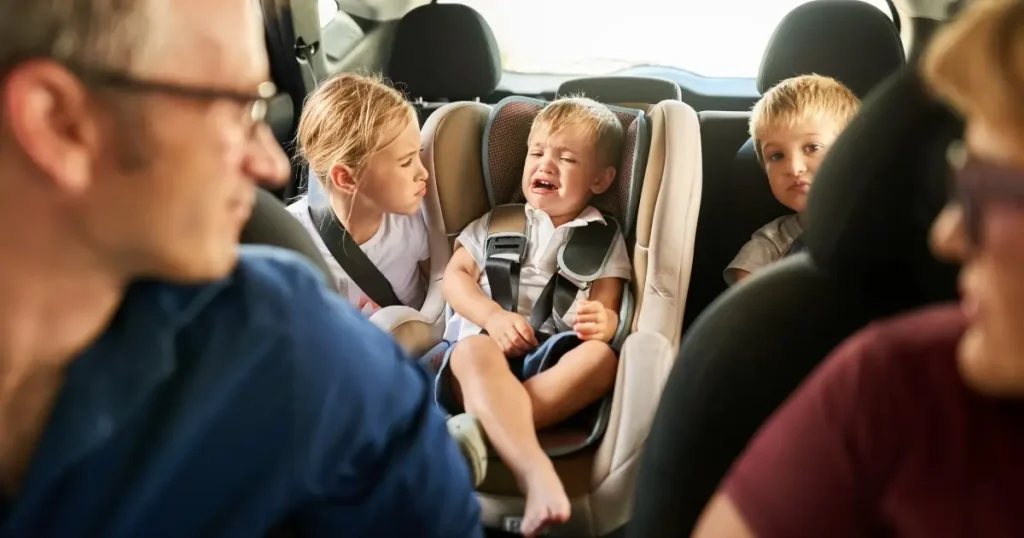
Current image: parents in car with crying children

If you’ve ever tried driving down I-94 with a toddler screaming in the backseat or a sibling showdown erupting over a dropped toy, you know the struggle is real. Minnesota parents have a lot to juggle—snowy roads, unpredictable traffic, and little voices demanding snacks, attention, or bathroom breaks at the worst possible time. At TSR Injury Law, we’ve seen firsthand how child-related distractions can turn into serious crashes. That’s why we’re sharing what every parent needs to know before buckling kids into the car.

Driving with children in the car creates unique challenges that may significantly increase the risk of a crash. Young children, especially, require focused attention, monitoring, and often create unexpected distractions. Parents trying to juggle driving responsibilities while managing children in the backseat could actually be putting them at a greater risk of harm.

At TSR Injury Law, our Minneapolis car crash lawyers have helped countless crash victims injured in complex cases, including those involving distracted drivers. During our 25 plus years of seeking justice for injured victims in Minnesota, we have secured over one billion in compensation for our clients. Our highly qualified legal team provides compassionate legal guidance while helping injured victims navigate insurance claims and pursue fair compensation for injuries.

Request a FREE case review today. Call: (612) TSR-TIME

Parents Owe a Duty of Care to Prevent Harm – Even When Children Are Unpredictable

Children, especially infants, toddlers and younger children, are unpredictable. They have a lot of demands and can quickly switch from being happy to meltdown mode. The younger they are, the more difficult it is for them to tell you what is wrong or what they need. When these situations arise at home, it is easier to manage them. In a car, however, these same challenges create dangerous distractions for parents who are driving. Concerned or frustrated parents may have a hard time not looking in the backseat or turning around to try to deal with the situation, but this can quickly lead to a dangerous crash.

It is vital for parents to understand, however, that even in this situation, they owe a duty of care to everyone on the road. A driver’s duty of care means taking reasonable measures to prevent harm to others, including anyone riding in their vehicle or sharing the road.

To help manage child distractions on the road, you can prepare ahead of time and make a plan for dealing with challenges before getting into the driver’s seat.

Common Ways Children Divert Driver Attention

When driving with children, parents may face several predictable situations that, without being prepared ahead of time, can pull their attention away from the road.

These special distractions are just a few of the common challenges parents may encounter when their children are in the car with them.

Crying, Arguing, or Fighting With Each Other

The sound of children crying or siblings engaged in arguments can create significant mental distractions for drivers trying to safely navigate traffic. Parents often feel compelled to intervene, and in doing so may take their hands off the wheel. When things escalate, they may even take their eyes off the road to address conflicts in the backseat. However, doing so significantly increases the risk of drifting into another lane, or into oncoming traffic and causing a crash.

Bored or Wanting to Get Out of the Car

Children who become restless during longer drives frequently express their discomfort through increasingly disruptive behaviors. Their repeated requests to stop or exit the vehicle can pressure parents into making abrupt driving decisions, particularly during highway travel or congested rush hour traffic.

Hungry, Thirsty, or Needing a Restroom Break

As adults, we struggle with fatigue on long trips, and may need to stretch our legs, get something to eat or take a restroom break. These physical needs are more urgent to children, and it is harder for them to let you know they may need a bathroom break soon. Often by the time you know about it, your child is already in a critical state of discomfort. Wanting a snack or something to drink are also very common disruptions you can be sure will arise on most road trips. Parents facing these increasingly urgent requests often divide their attention between scanning for appropriate stopping locations and managing their driving environment. This divided focus can also compromise their ability to focus on the road and respond to sudden traffic changes.

Dangerous Ways Parents May Respond to Child Distractions

Parents may be tempted to react or make rash decisions when addressing child distractions, but this is a bad idea. While completely human, these reactive responses can turn even minor distractions into serious safety hazards.

  • Trying to Multi-task: Parents who attempt to handle multiple tasks simultaneously, such as passing snacks while navigating traffic.
  • Looking Back to Handle Backseat Passengers: Taking eyes off the road for even two seconds to check on children increases crash risk on busy roadways.
  • Not Handing Off Duties to Another Adult or Pulling Over: Parents who cannot pass their responsibilities to passengers or safely pull over during distractions face preventable crash scenarios.
  • One-Handed Driving: Reaching back to retrieve dropped items or hand food to children compromises vehicle control, especially during emergency maneuvers.
  • Delayed Braking Responses: Mental focus on child concerns rather than paying attention to traffic conditions limits reaction time to sudden stops or traffic changes ahead.
  • Lane Drift: Attention diverted to child needs often results in unintentional lane deviations on highways.
  • Increased Speed: Parents may accelerate unconsciously when stressed by persistent child distractions.
  • Emotional Driving: Frustration with disruptive children leads to aggressive driving behaviors, including tailgating or abrupt lane changes.
  • GPS/Navigation Errors: Divided attention causes missed turns or exits, prompting unsafe last-minute corrections.

How Parents Can Prepare to Drive More Safely With Children

Parents who prepare for driving with their children dramatically reduce the number of disruptions. Limiting distraction risks and having a solid plan for dealing with challenges when they arise, creates a safer environment for everyone. Strategic planning also allows parents to meet their children’s needs during travel while continuing to uphold their duty of care as a driver.

Here are some key helpful tips for parents driving with children – even for short trips:

Plan Entertainment and Activities Before Departure

Prepare activities such as audiobooks, travel games, and tablet devices with preloaded content to help keep older children engaged during commutes. Parents who prepare these entertainment options before starting the car avoid dangerous mid-drive searches for distractions while navigating busy highways. For infants and younger children, feed them shortly before you go.

Pack Snacks and Drinks in Easy-to-Access Containers

Having another adult in the car hand out ready-to-eat snacks and spill-proof drinks within easy reach prevents hunger-related meltdowns. Parents could benefit from using car organizers that allow older children to access their own refreshments without requiring a driver’s assistance.

Schedule Regular Breaks for Longer Trips

Parents should plan frequent stops during their commute to give little legs a chance to stretch and address restlessness before it becomes disruptive behavior. Minnesota has multiple highway rest areas and family-friendly attractions. These serve as ideal restrooms and break areas where children can safely eat snacks and expend energy away from moving traffic.

Discuss Behavior Expectations Before Starting the Car

Parents can have clear conversations to tell children what to expect. Knowing ahead of time they are going on a road trip, what behavior is acceptable, sets important safety boundaries for children. Parents who reinforce these expectations consistently find children more cooperative during critical driving moments when full attention to traffic conditions matters most.

Properly Secure Children in Age-Appropriate Safety Seats

Placing children and infants in correctly installed car seats and booster seats minimizes physical discomfort. It also reduces the risk of a toddler or young children being able to wriggle out of their car seats while the vehicle is in motion. Be sure to set the child safety lock on car doors as well so older children cannot accidentally open the door.

Keep Emergency Supplies Within Easy Reach

Essential items such as tissues, wipes, and comfort objects should be placed where an older child or another adult in the car can access them with minimal driver involvement. This allows parents to handle minor emergencies without compromising attention on the road or vehicle control.

When driving with children in a vehicle, especially for long road trips, it is a good idea to have another adult ride with you. If that is not possible and an urgent situation arises, it is important to stay calm and focused on the road. Find the closest safe place to pull over where you can help your child or deal with an urgent situation without creating a crash risk.

Injured In a Car Crash? Contact Our Trusts Car Crash Attorneys at TSR Injury Law Today

At TSR Injury Law, our knowledgeable Minneapolis car crash attorneys understand families’ stress after distraction-related crashes. We help parents recover compensation for medical bills, lost wages, and other damages, and there are no upfront costs to pay.

Our trusted law firm provides compassionate guidance through every step of the legal process while you focus on your family’s recovery and well-being.

Call today for a free case review, or you can complete our simple online form to have a caring legal representative reach out to you within 24 hours.

Need Legal Help? Call Our Trusted Law Firm Today (612) TSR-TIME

Proving Distracted Driving in Minnesota: Legal Strategies for Car Crash Victims

Young male eating a bagel and drinking coffee while driving

Distracted driving crashes are all too common in Minnesota, and they can turn your life upside down in seconds. Whether it’s someone scrolling through their phone on I-94 or taking a selfie on a side street, one careless moment can lead to devastating injuries. If you or someone you love was hurt by a distracted driver, it’s important to understand your legal options. At TSR Injury Law, we’ve helped countless Minnesotans hold negligent drivers accountable—and we’re here to do the same for you.

Distracted driving causes thousands of preventable crashes in Minnesota and across the country each year. When drivers take their attention off the road, even for seconds, the consequences are often devastating.

At TSR Injury Law, our knowledgeable Minneapolis car crash attorneys understand the challenges you face after being injured by a distracted driver. We welcome the opportunity to speak with you and learn more about you and how you were injured. In this free, no-risk consultation, we can answer your questions and clearly explain your legal options. We are skilled and fierce advocates for injured people, and we are ready to put that experience to work for you.

Call (612) TSR-TIME for a FREE Case Review today.

Distracted Driving Laws in Minnesota

Distracted driving is more than texting while operating a motor vehicle. It is engaging in any behavior that takes your eyes and mind off the road.

Minnesota’s Hands-Free Law

Minnesota’s hands-free cell phone use law prohibits drivers from reading, composing, or sending electronic messages while operating a motor vehicle. Under this law, drivers are prohibited from:

  • Holding your cell phone while driving, even if you are using voice commands to operate it
  • Sending or reading emails and text messages
  • Taking videos or selfies while driving
  • Using any other electronic communications

Since August 2019, Minnesota drivers legally cannot hold their phones while operating a vehicle. Drivers must use voice commands or single-touch activation for calls and navigation.

Teen Driver Restrictions

Drivers under 18 with provisional licenses face additional restrictions, prohibiting all cell phone use while driving, even in hands-free mode. These stricter rules recognize the increased crash risk for inexperienced drivers.

According to Minnesota’s graduated licensing system, teen drivers also have passenger limitations and nighttime driving restrictions. Violations of these provisions create additional evidence of negligence when teen drivers cause distracted driving crashes.

What Penalties Do Minnesota Drivers Face for Violating Distracted Driving Laws?

In Minnesota, even first-time offenders are not let off the hook. Distracted drivers who get caught face up to $100 in fines, and possible court fees.

Subsequent offenders face fines up to $300 plus court fees. Distracted drivers who cause crashes that severely injure or cause fatal harm to others may face additional penalties, including civil liability and felony criminal charges.

Why Distracted Driving Is Dangerous

Scientific studies have proven that the human brain cannot truly multitask while driving. Instead, it rapidly switches between tasks, creating moments where the driver is effectively blind to road conditions. Even a two-second distraction doubles your crash risk. A five-second distraction—like drivers who read a text message—when traveling at highway speeds, is like traveling the length of a football field without looking at the road.

What Are the Most Common Distracted Driving Behaviors?

Texting while driving remains one of the most common distractions on Minnesota roads, but there are many other activities that are equally dangerous and take a driver’s attention off the road.

When drivers engage in these behaviors, they significantly increase their risk of causing a crash and serious harm to others:

  • Manual Distractions: Eating or drinking, adjusting radio controls, reaching for objects, applying makeup, or grooming. These activities take your hands off the steering wheel, which may not seem important. However, if you encounter an unexpected road hazard, like an object in the road or a swerving car, it reduces your control and increases your reaction time.
  • Visual Distractions: Looking at navigation systems, watching or taking videos with your cell phone, or rubbernecking to look at crash scenes. Visual distractions, including looking at texts or emails, take a driver’s eyes off the road, creating a form of temporary blindness to current or developing traffic situations. A child or animal could dart into the road, or another vehicle may suddenly cut in front of you or slam on the brakes. Another danger of taking your eyes off the road is that it could cause you to drift into another lane of traffic.
  • Cognitive Distractions: This type of distraction is one that often gets overlooked. However, talking with passengers, daydreaming, driving while upset or stressed, or driving while fatigued are all common distractions that take your mind off driving. Mental distractions slow reaction times and reduce a driver’s ability to notice important visual cues, like a swerving driver, even when their eyes remain on the road.
  • Electronic Distractions: Programming navigation systems, scrolling social media, taking photos, or watching videos are all types of electronic distractions. Electronic distractions of any kind are particularly dangerous because they often combine manual, visual, and cognitive distractions simultaneously.
  • External Distractions: Focusing on roadside activities, billboards, or other events outside the vehicle. These distractions draw a driver’s attention away from the road ahead where emerging hazards require immediate response.

When a driver who engaged in any of these activities causes a crash, collecting evidence of the specific distraction strengthens your injury claim.

How Can I Prepare to Avoid Distractions Before Driving?

Defensive driving techniques significantly help prevent car crashes, including those caused by distracted driving. You can also take specific preventative measures before starting your journey to further reduce your crash risk.

Here are some key steps that can help you to avoid a distracted driving crash:

  • Make Adjustments and Set Up Electronic Before You Leave: Before driving, take five minutes to set up your GPS destination, select your music playlist, and adjust your mirrors and seat position. These preparations eliminate the need for adjustments while driving.
  • Secure Loose Items: Make sure any groceries, work bags, purses or other loose items in your vehicle are secured before setting off. You may have to stop suddenly to avoid hitting another vehicle, pedestrian or object in the road. If you slam on your brakes or turn, you do not want to get distracted by items shifting around in your vehicle.
  • Secure Your Phone: Place your phone in a secure location before taking off and set it to Do Not Disturb If you must make a call, use hands-free technology. Many phones now offer driving modes that automatically silence notifications while in motion. Consider installing specialized apps that block notifications while driving and send automatic replies to incoming messages.
  • Secure Children and Pets: If traveling with children or pets, ensure they are properly secured with appropriate restraints before departure. When possible, have another adult in the vehicle to tend to any problems that arise. If you must tend to a child while driving, you should first pull off the road to a safe location – away from passing traffic.
  • Break Frequently During Long Road Trips: If you are traveling a longer distance, be sure to plan regular breaks. Long commutes can cause road fatigue, magnifying the impact of other distractions. Even brief stops help refresh your attention and reduce your crash risk.
  • Avoid Talking During Challenging Driving Conditions: Even with the convenience and added safety of hands-free technology, conversations are a cognitive distraction. During especially challenging driving conditions, like heavy traffic or poor weather, consider limiting all conversation, to help you maintain maximum focus on the road.

How Do Minneapolis Car Crash Attorneys Prove Distracted Driving?

If you are injured in a crash caused by a distracted driver, you may be eligible to seek compensation for your medical costs, lost wages, and other damages. However, as the victim, legally known as the plaintiff in a civil liability case, you must be able to prove the other driver was negligent.

Proving distracted driving is not easy. You must be able to demonstrate specific legal elements to have a case.

At TSR, we establish these key elements of negligence to develop a strong case when a distracted driver causes you harm.

Establishing Duty of Care

All Minnesota drivers have a legal obligation to operate their vehicles safely and attentively. This duty includes following traffic laws, maintaining control of their vehicles, and keeping their attention focused on driving at all times.

Minnesota courts have consistently upheld this duty of care in distracted driving cases. The standard requires drivers to maintain the level of attention that a reasonable person would under similar circumstances. This legal framework allows us to establish clear expectations for driver behavior.

Demonstrating Causation

When we represent you, we work diligently to establish a direct link between the at-fault driver’s distracted behavior and the crash that injured you. We show how that distraction directly caused or substantially contributed to the collision.

Establishing this link may require consulting with an accident reconstruction specialist to investigate the evidence and recreate the crash. Accident reconstructionists utilize their special knowledge, skills, and technical tools to determine what the distraction was, and how it impacted the driver’s actions leading up to the crash.

Documenting Tangible Damages From the Crash

The final element in establishing a valid injury case is determining whether there were any damages, like medical costs or property damage.

To ensure you recover full and fair compensation for damages resulting from the crash, it is important to accurately document the following:

  • All medical costs related to the crash
  • Physical pain and suffering
  • Emotional trauma
  • Property damage
  • Lost wages
  • And other losses

At TSR Injury Law, we guide our clients on to document their current injuries. We also assess and determine their future medical needs and long-term impacts. We calculate both the economic damages (medical bills, lost income) and non-economic damages (pain, suffering, emotional trauma) to ensure your compensation reflects the true cost of your injuries.

Why Contact an Experienced Car Crash Lawyer Sooner Than Later

Proving negligence of distracted driving requires specific evidence, including what may have been distracting the at-fault driver, such as:

  • Footage from Minnesota’s Public Safety Cameras, for instance, gets overwritten every 7-14 days to make space for new recordings.
  • Crash Debris and other physical evidence gets cleared away quickly to make room for traffic
  • Witnesses, who have no personal investment in your case, soon forget key details

Contacting an attorney soon after your crash helps to ensure much of this evidence is preserved.

When TSR Injury Law takes your case, we work quickly to gather existing surveillance videos, vet witness statements and investigate the crash scene to build a strong and compelling case on your behalf.

What Evidence May Prove the At-Fault Driver Was Distracted?

Unlike other driving violations that might leave obvious physical traces, distraction often occurs invisibly inside the vehicle moments before impact.

It is important to collect evidence showing the at fault driver diverted their attention from the road, creating a dangerous situation that directly led to your injuries.

A successful case transforms seemingly routine elements, like phone records or surveillance footage, into powerful legal tools that can significantly strengthen your claim for compensation.

  • Cell Phone Records: Our legal team will examine data to search for calls, texts, or app usage that occurred at the time of the crash. These records can be obtained through formal discovery processes and provide precise time-stamped evidence of phone activity.
  • Witness Statements: Observations from other drivers or pedestrians who saw the driver using a phone or engaging in distracting activities. Witnesses might have noticed the driver looking down, holding a phone, eating, looking into the back seat, or otherwise not focusing on driving before the collision.
  • Police Reports: Official documentation may include officer observations about potential distraction. For instance, officers may document statements made by witnesses at the scene. They may personally observe physical evidence like food, makeup, or electronic devices in the front seat of the vehicle.
  • Video Footage: Traffic cameras, dashcams, or security cameras that captured the driver’s actions. When available, these visual records provide hard-to-dispute evidence of distraction before and during the crash.
  • Vehicle Data: Information from the other vehicle’s event data recorder (black box) shows speed, braking patterns, and other data that may support your case. Sudden or delayed braking may indicate a driver who was not paying attention to developing traffic conditions.
  • Social Media Activity: Posts or updates drivers made at or near the time of the crash may also support a claim. Some drivers inadvertently document their distracted behavior by posting, streaming, or updating social media while driving.
  • Admission of Distraction: Sometimes drivers may make statements to police, witnesses, or insurance adjusters immediately after a crash, before considering the legal implications, providing powerful evidence.
  • Physical Evidence: Items in the vehicle, like spilled food, open makeup containers, or unsecured pets, may indicate the driver was engaged in distracting activities.

How the Minnesota Hands-Free Law Impacts Your Claim

The Minnesota Hands-Free Law strengthens distracted driving injury claims because it has established a clear legal standard for acceptable phone use while driving. Drivers who violate this law by holding their phones create a presumption of negligence that supports your injury claim.

Cell phone records showing handset use during the crash provide further evidence of this negligence, along with any traffic citations assessed against that driver.

The hands-free law also simplifies jury instructions in distracted driving cases. Rather than debating what constitutes reasonable attention, jurors can focus on the clear violation of a specific safety statute designed to prevent exactly these types of crashes.

Common Defense Tactics At-Fault Drivers May Try and How We Dispute Them

Attorneys for defendants in distracted driving cases often employ specific strategies to avoid liability, such as by trying to shift blame or minimize their client’s responsibility for the crash.

Here are some of the most common defense tactics:

  • Claiming Shared Fault: They may argue you were partially responsible for the crash. We counter with evidence showing their client’s distraction was the primary cause. We investigate thoroughly to document how the distracted driver’s actions directly led to the collision, regardless of other factors.
  • Denying Phone Use: Defendants often claim they were not using their device, but we obtain relevant cell phone records and witness testimony to prove otherwise. Through formal discovery, we can access detailed phone activity logs that reveal the exact timing of any calls, texts, and app usage.
  • Claiming Emergency Use: Some defendants may argue they were using their phone for an emergency call. We investigate to verify whether a genuine emergency existed. Minnesota law does allow using a cell phone in an emergency under limited circumstances. However, this exception is narrow and requires proof of an actual emergency.
  • Challenging Evidence: Defense attorneys may question how evidence was obtained. At TSR Injury law, we take great care to ensure all evidence is properly collected and authenticated. Our legal team works with digital forensics specialists when necessary to establish the reliability of electronic evidence.
  • Minimizing Injury Severity: The attorney for the defendant may try to downplay your injuries. We dispute this by working with medical experts to document the full extent of your injuries and their impact on your life. This includes gathering your relevant medical records, testimony from medical experts, and evidence of how your injuries affect your daily activities.
  • Arguing Pre-Existing Conditions: Defendants may claim your injuries existed before the crash. We obtain comprehensive medical history and expert testimony to differentiate between pre-existing conditions and new injuries or aggravated conditions that were caused by the crash.
  • Delaying Tactics: Insurance companies often try to delay claims, hoping victims will settle for less. We maintain constant pressure through court filings and negotiations to keep your case moving forward efficiently.

Why Hire TSR Injury Law to Manage Your Injury Claim After a Distracted Driving Crash

TSR Injury Law brings significant experience to your case; we have been representing victims injured in Minneapolis car crashes for decades. Our attorneys understand the specific challenges of distracted driving cases and how to overcome them. We have established relationships with accident reconstruction specialists, medical professionals, and other experts who can help to strengthen your case.

Our attorneys investigate thoroughly, collecting all available evidence before it disappears. We deploy teams quickly to document crash scenes, interview witnesses, and secure video footage before it can be deleted or recorded over. This rapid response often captures critical evidence that might otherwise be lost forever.

We handle all communications with insurance companies, preventing them from using your statements against you. Insurance adjusters are trained to elicit statements that can damage your claim. When you work with TSR Injury Law, we shield you from these tactics while advocating aggressively for your interests.

Most importantly, we fight for maximum compensation that reflects the true cost of your injuries, not just what insurance companies initially offer. This includes not only current medical expenses but also future medical needs, lost earning capacity, and compensation for pain and suffering.

Our track record speaks for itself. We have secured millions in compensation for car crash victims throughout Minnesota, including those injured by distracted drivers. While past results cannot guarantee future outcomes, our experience provides the foundation for building strong cases for each client we represent.

Need Legal Help After a Distracted Driving Crash? Call TSR Injury Law Today

When you are injured by a distracted driver in Minnesota, you need an attorney who understands the unique challenges these cases present. TSR Injury Law has the experience, resources, and determination to hold distracted drivers accountable for the harm they cause.

You pay no upfront costs when working with TSR Injury Law. We operate on a contingency fee basis, meaning we only get paid when you receive compensation.

Call (612) TSR-TIME today. Let us help you secure the justice and compensation you deserve.

Minneapolis Car Crash Lawyers: Psychological Trauma After a Car Crash

A car crash may last just seconds, but the emotional aftermath can stretch on for months—or even years.

young woman sitting on the floor looking upset and traumatized, gazes out of window

The impact of a car crash extends far beyond physical injuries. While broken bones and visible wounds often receive immediate attention, the psychological trauma that follows can be just as debilitating—yet frequently goes unrecognized. Many Minneapolis residents who survive crashes find themselves struggling with nightmares, anxiety, and fear that persist long after their physical injuries heal.

At TSR Injury Law, our Minneapolis car crash attorneys understand the full scope of crash-related trauma. We recognize that psychological injuries deserve the same attention and compensation as physical ones. Our team works closely with mental health professionals throughout Minneapolis to ensure clients receive proper care while building strong cases for the compensation they deserve. If you are experiencing emotional distress following a collision, our experienced Minneapolis car crash attorneys are here to help you navigate both your recovery and your legal options.

Call (612) TSR-TIME for a FREE case review today.

What Is Psychological Trauma After a Car Crash?

Psychological trauma is very common after a car crash. The emotional impact often lasts long after physical injuries heal. Your brain stores crash memories differently than normal events.

Many crash victims feel ongoing fear and anxiety. These feelings are real responses to trauma. They deserve the same attention as physical injuries.

Types of psychological trauma after crashes include:

  • Acute Stress Disorder: Early symptoms in the first month
  • Post-Traumatic Stress Disorder (PTSD): Ongoing symptoms lasting over one month
  • Adjustment Disorders: Trouble adapting to life changes after the crash
  • Specific Phobias: Fear of driving or riding in vehicles
  • Depression: Feeling sad and losing interest in normal activities

Can I Seek Compensation for Mental Health Treatment After My Minneapolis Car Crash?

Yes. Minnesota law recognizes mental health damages from car crashes. You can seek payment for therapy costs and emotional suffering.

You must prove the crash caused your trauma. This means showing the other driver owed you a duty of care and breached that duty by being negligent. You also need to show their actions led to your mental health problems. Minneapolis car crash lawyers know how to connect these dots for you.

How Much Could a Car Crash Case With Psychological Trauma Be Worth?

Every trauma case is unique, and unlike physical injuries with defined medical costs, psychological suffering involves more subjective factors that require careful documentation.

Minnesota courts recognize the legitimacy of these claims, but you will need to be diligent to document how the trauma has impacted your daily life, relationships, and ability to work.

Factors that may impact the overall value of your case include:

  • Therapy costs and medication expenses
  • How long you need treatment
  • How badly the trauma affects your daily life
  • Lost wages if trauma prevents you from working
  • Future care needs for ongoing symptoms
  • Your ability to clearly testify about your mental trauma

What Are the Signs or Symptoms of Psychological Trauma After a Car Crash?

Emotional trauma doesn’t always appear right away. For many people, symptoms surface weeks or even months after the crash, once physical wounds begin to heal. This delayed reaction is normal—but it can complicate injury claims.

Some people notice PTSD signs and symptoms right away. Others may not have symptoms until months or even years later.

Many crash victims focus only on physical injuries at first. Your mind might block emotional trauma temporarily. As your body heals, psychological symptoms often surface. This delayed reaction is normal but can complicate claims.

Common signs of trauma include:

  • Flashbacks that make you re-live the crash
  • Nightmares about the crash
  • Anxiety when driving or riding in cars
  • Avoiding places that remind you of the crash
  • Feeling numb or disconnected from others
  • Being easily startled or always on edge
  • Trouble sleeping or focusing
  • Mood swings and irritability

If you’ve noticed any of these symptoms, it’s time to seek help—both medical and legal.

Is PTSD and Other Mental Trauma From a Car Crash Curable?

Treatment works for many crash survivors. Getting help early often leads to better results. Most people see improvement with proper care.

Mental trauma responds to treatment much like physical injuries. With the right help, many people recover fully. Others learn effective ways to manage remaining symptoms.

Minneapolis mental health providers offer specialized care for crash-related trauma. These treatments target the specific challenges that crash survivors face.

Your recovery might not follow a straight path—but with the right help, it will move forward.

How Long Does It Take to Recover From Emotional Trauma?

Everyone heals at their own pace. Some people feel better within a few months. Others may need a year or longer, especially if trauma symptoms are severe or go untreated, and sometimes psychological injuries are permanent.

Recovery rarely moves in a straight line. Good days often mix with harder ones. Many PTSD victims get discouraged during treatment, but this up-and-down pattern is normal.

Each person’s healing journey looks different. For some, success means driving again. For others, it might mean fewer nightmares. Working with professionals who understand crash trauma provides the best support.

Documenting PTSD and Other Psychological Injuries for Your Minneapolis Injury Claim

Unlike broken bones, you cannot see trauma on an X-ray. This makes documenting your mental health crucial for your claim.

Strong evidence for your mental trauma claim includes:

  • Diagnosis from a mental health professional
  • Treatment records showing regular care
  • Notes from therapy sessions
  • Personal journals tracking your symptoms
  • Statements from family and friends about changes in your behavior
  • Work records showing missed days or problems
  • Before-and-after evidence of your mental state

Minneapolis car crash lawyers know how to gather this proof and present it effectively to insurance companies. This skill matters when insurers try to downplay mental health claims.

Treatments for Mental Trauma That Support Recovery and Legal Outcomes

Effective treatment for psychological trauma serves two important purposes. First and most importantly, it helps restore your mental wellbeing and quality of life after a crash. Second, it creates a documented record of your condition that strengthens your legal claim.

Minneapolis healthcare providers offer several evidence-based approaches that address the unique challenges of crash-related trauma. These treatments not only provide relief from symptoms but also demonstrate to insurance companies and courts that your psychological injuries are real and require proper compensation.

Talk Therapy

Talking with a therapist helps you process the trauma. You learn to challenge negative thoughts about the crash. This approach helps you develop healthy coping skills.

Eye Movement Desensitization and Reprocessing (EMDR) Therapy

This treatment uses eye movements to help your brain process trauma. It helps store crash memories in a less painful way. Many crash survivors find relief with this method.

Gradual Exposure

Working with a therapist to slowly face crash-related fears can help. You might start by sitting in a parked car. Later, you may work up to short drives. This step-by-step approach builds confidence.

Medication

Some people benefit from medicine that reduces anxiety or helps with sleep. A doctor can prescribe options that work with your therapy plan.

How Legal Representation Strengthens Your Trauma-Related Claim

Lawyers with trauma case experience understand both legal and mental health aspects. They know how to prove invisible injuries to insurance companies. This knowledge helps you get fair compensation.

Insurance companies often resist paying for mental health treatment. They may claim your trauma is not related to the crash. A skilled lawyer counters these familiar insurance company tactics with solid evidence.

The legal process itself can be stressful for crash survivors. A good lawyer handles the difficult parts for you. This protection gives you space to focus on getting better.

Contact Our Minneapolis Car Crash Attorneys for a Confidential Consultation About Your Psychological Trauma Case

If you’re struggling with emotional trauma after a crash, we’re here to help. Talking with a lawyer doesn’t obligate you to file a claim—but it will help you understand your rights.

Consultations are confidential and completely free. We work on a contingency basis, so you don’t pay anything unless we win your case.

We listen to your story with care and respect. Many clients find relief just by having someone understand their suffering. Getting legal help early preserves important evidence and ensures you meet Minnesota filing deadlines. Since we take cases on contingency, there are no costs or fees to pay up front.

Experienced Lawyers. Fighting for You. Call TSR Injury Law today. (612) TSR-TIME

Delayed Injury Symptoms: Why Minnesota Car Crash Victims Should Wait to Settle

Current image: doctor standing before a screen showing the MRI of a brain injury

Car crashes can cause immediate damage — but not all injuries show up right away. In the days and even weeks after a crash, it’s common for new symptoms to emerge. When those symptoms are tied to the collision, they can be painful, disruptive, and expensive.

Insurance companies, however, often push for quick settlements — and that’s a problem. Signing too soon can leave you without the compensation you need for medical bills, missed work, and long-term care.

At TSR Injury Law, our experienced car crash attorneys in Minneapolis understand the critical connection between delayed symptoms and proper compensation. Our knowledgeable legal team actively protects the rights of the Minnesota car crash victims we represent, fighting to ensure all injuries, both immediate and delayed, are factored into any final settlement agreement.

Need legal help after a crash? Call (612) TSR-TIME for a free consultation.

Delayed Injury Symptoms: Why Minnesota Car Crash Victims Should Wait to Settle

After a car crash, it can take time for your body to fully react. Sometimes the adrenaline masks pain. Other times, the injuries themselves simply take time to show up.

This is especially true with injuries that affect muscles, nerves, or your brain. You may feel “okay” at first — only to notice new symptoms or increasing discomfort days later.

Settling early after a car crash, before the extent of your injuries has become fully known, can create a significant financial hardship. Until your injuries have fully resolved and your treatments have concluded, you are getting new medical bills. Settling too soon can leave you paying thousands of dollars out of your own pocket for these additional costs.

At TSR Injury Law, we understand the critical connection between delayed crash injury symptoms and proper compensation. When we represent you, we protect your rights from day one, ensure that all your injuries, both immediate and delayed, receive proper consideration before any settlement is agreed to or signed.

Why Agreeing to a Quick Settlement After a Minnesota Car Crash Can Cost You

Early settlements almost always benefit insurance companies, not injured victims. Insurance adjusters know that offering money quickly can tempt those facing immediate financial pressure from medical bills and missed work. However, these initial offers cannot account for the full scope of damages, and victims run the risk their injuries may worsen or new symptoms may develop in the days or weeks that follow.

Once you accept a settlement and sign a release, you legally forfeit your right to pursue additional compensation, even if your condition deteriorates significantly. This permanent and binding decision comes at precisely the wrong time, because in the early days and weeks after your car crash, your body has not yet revealed the full extent of your injuries. Many crash injuries, particularly those affecting soft tissue, nerves, and the brain, follow a gradual progression that medical evaluations cannot fully predict in the immediate aftermath.

Questions to Ask Yourself Before You Agree to Any Settlement

  • Am I still seeking medical treatment?
  • Has my doctor discharged me?
  • Do I still have pain and other limitations from my car crash?
  • Am I back at work and able to do my job as before?
  • Has my car been repaired or replaced at no cost to me?
  • Can I function normally at home and take care of daily household tasks?

Thes are just some initial questions to ask yourself before agreeing to any settlement. Until these and other issues have been resolved, any early settlement offer will not be compensating you for all of your damages.

What Are Delayed Injury Symptoms After a Car Crash in Minneapolis?

Delayed injury symptoms can be either physical or cognitive problems that do not appear immediately after a collision but develop hours, days, or even weeks later.

Many Minneapolis car crash victims initially believe they escaped serious injury, only to find themselves experiencing increasing discomfort or concerning new symptoms as time passes. These delayed symptoms may indicate serious underlying injuries that need ongoing or specialized medical care that was not considered in the insurance company’s early settlement offer.

What Delayed Injury Symptoms Should I Watch for After My Minneapolis Car Crash?

Many crash victims notice subtle warning signs that something may be wrong, even before major symptoms develop. It is vital that you pay attention to any new physical or cognitive changes, even if they seem minor, following your collision.

Common delayed injury symptoms may include:

  • Headaches that persist or worsen
  • Neck or shoulder stiffness and pain
  • Back pain or spasms
  • Numbness or tingling in arms or legs
  • Abdominal pain or unusual bruising
  • Dizziness or balance problems
  • Blurry vision or sensitivity to light
  • Ringing in the ears
  • Memory problems or difficulty concentrating
  • Mood changes, irritability, or depression
  • Sleep disturbances or fatigue
  • Nausea or changes in appetite

What Six Crash Injuries Commonly Have Delayed Symptoms?

Some injuries after a car crash may be serious yet not reveal immediate symptoms, only to develop significant medical problems over time.

Here are six severe crash injuries that commonly develop delayed injury symptoms days, weeks, or even months later:

Whiplash and Neck Injuries

The rapid back-and-forth movement of a crash stretches neck tissues beyond normal limits. Whiplash injuries cause significant pain, stiffness, and restricted movement. The pain may seem minor initially, but the inflammation will continue to develop for up to 24-72 hours or longer after impact.

Traumatic Brain Injuries (TBIs)

Concussions and other types of brain trauma often do not show immediate symptoms. However, memory problems, concentration difficulties, headaches, and mood changes often appear gradually as brain tissue responds to the initial trauma.

Spinal Disc Injuries

Herniated or bulging discs develop as spinal structures compressed during the crash break down over time. Initial mild discomfort can progress to severe pain and nerve damage days or weeks later.

Internal Bleeding

Damage to blood vessels may not create noticeable symptoms until significant blood accumulates. Dizziness, weakness, and abdominal pain can develop gradually as internal bleeding continues. Without immediate treatment, internal bleeding can be life-threatening.

Shoulder Injuries

Rotator cuff tears and labral injuries often produce delayed pain and limited range of motion as inflammation increases. These injuries likely need surgical repair to ensure a full recovery.

Post-Traumatic Stress Disorder (PTSD)

The psychological trauma of a crash can continue to manifest for days, weeks, or even months later. Victims may experience flashbacks, anxiety, sleep disturbances, and develop an intense fear of driving that may make them avoid getting into a car altogether.

What If I Develop New Symptoms or My Injuries Worsen After I Agreed to a Settlement?

Your ability to pursue additional compensation after new symptoms develop depends entirely on the settlement status. If you only had verbal discussions with an insurance company but have not yet signed a release of claims, you may still retain your legal rights to pursue full compensation. Your Minneapolis car crash attorney can still incorporate these new developments into ongoing negotiations.

If, however, you signed a settlement agreement and release of liability, the situation becomes much more challenging. These documents typically contain language that permanently bars you from seeking additional compensation, even for injuries that were unknown when you signed. Limited exceptions may exist in cases involving documented fraud, misrepresentation, or improper pressure tactics from insurance representatives. A knowledgeable attorney can review your specific circumstances to determine if you have any legal options for addressing your worsening condition.

When Should I See a Minneapolis Doctor For Delayed Injury Symptoms?

Right away. If anything feels off — even slightly — get checked out. Tell your doctor about the crash and when the symptoms started so they can document everything correctly.

Seek medical attention immediately when you notice any new or worsening symptoms following your car crash. Even seemingly minor symptoms like persistent headaches or mild neck pain can indicate serious underlying injuries that require prompt treatment. When visiting your healthcare provider, clearly communicate that these symptoms developed after your recent car crash to establish proper documentation in your medical records.

This timely medical evaluation serves two critical purposes. First, it ensures you receive appropriate treatment before your condition worsens. Second, it creates an official medical record connecting your symptoms to the crash. Documentation is essential evidence in your injury claim.

It is worth mentioning that delaying medical care after a car crash not only risks your health but also gives insurance companies an opportunity to claim your injuries resulted from something other than the crash.

Can I Include Delayed Crash Injury Damages in My Injury Claim?

Yes, you can include compensation for delayed symptoms in your injury claim if you document them properly and have not already signed a settlement agreement. Minnesota law recognizes that many crash injuries develop gradually, and you deserve compensation for all harm resulting from the collision, and not solely your immediately apparent injuries.

The key to successfully including delayed injuries in your claim lies in proper medical documentation and consistent treatment. Work with healthcare providers who understand the connection between your symptoms and the crash and follow all treatment recommendations.

At TSR Injury Law our legal team can guide you throughout the legal process to ensure all medical evidence is documented and clearly establishes the causal link between the crash and your developing condition.

How Minnesota Insurance Companies Push Back on Claims With Delayed Injury Symptoms

Insurance companies routinely challenge claims involving delayed symptoms using predictable tactics designed to minimize their financial liability for your injuries.

The most familiar tactics of insurance companies include:

  • Pre-existing Condition Arguments: Insurers will argue your symptoms result from old injuries or degenerative conditions rather than the recent crash.
  • Causation Challenges: Questioning the connection between your car crash and the onset of delayed symptoms, especially if you waited days or weeks after the crash to seek medical help.
  • Minor Impact Defense: Insurance representatives may argue that a “minor” collision could not possibly cause significant injuries, despite medical evidence proving otherwise.
  • Gaps in Treatment Exploitation: Any delay in seeking treatment or missed appointments becomes ammunition to claim your injuries are not serious or not crash-related.
  • Social Media Surveillance: Be aware insurance companies may monitor your online activities, looking for posts that contradict your injury claims or suggest greater physical capability than reported.
  • Quick Settlement Pressure: Representatives push for rapid resolution before the full extent of your injuries becomes apparent, often presenting “time-limited” offers to create artificial urgency.

Why You Should Consider Legal Help for a Minnesota Car Crash Claim With Delayed Injury Symptoms

Our experienced car crash injury attorneys in Minneapolis understand the medical and legal complexities of delayed injury cases. We consult with medical experts who can properly document the connection between your crash and developing symptoms, building compelling evidence that insurance companies cannot easily dismiss. This experience is particularly valuable when dealing with internal injuries like concussions, herniated discs, and PTSD, that commonly develop symptoms slowly.

Legal representation also protects you from common insurance tactics like premature settlement offers and arbitrary claim denials. Your legal team can manage all communication with insurance adjusters on your behalf, helping you avoid mistakes that could hurt your claim.

At TSR Injury Law, we ensure no settlement discussions happen until your medical condition stabilizes, allowing for an accurate valuation of your long-term needs.

Do You Have Delayed Injury Symptoms After a Car Crash? Call Our Trusted Minnesota Law Firm Today

If new symptoms are starting to show, don’t wait. Insurance companies want to move fast — but your body needs time to heal, and your claim deserves time to be fully evaluated.

Protecting your health and legal rights after the onset of delayed injury symptoms requires prompt action. Do not let insurance companies minimize the serious nature of your delayed symptoms or pressure you into insufficient settlements.

At TSR Injury Law, our knowledgeable legal team in Minneapolis is deeply committed to protecting your rights and fighting for the full and fair compensation you deserve. Contact our law offices today to discuss how we can help. We accept car crash claims on contingency, so there are no upfront costs or fees to pay to engage our services.

Need a Minnesota lawyer who will fight for you? Call (612) TSR-TIME today.

Long-Term Car Crash Effects Minneapolis Victims Need to Know About

young man with prosthetic leg in physical therapy

 Just because the tow trucks have cleared the scene doesn’t mean the crash is behind you. For a lot of folks in Minneapolis, the real struggle begins after the dust settles. Lingering pain, stress, and unexpected complications can stretch on for months—or even years.

At TSR Injury Law, we’ve walked this road with hundreds of clients across the Twin Cities. Our Minneapolis-based car crash attorneys know just how complicated life can get after a serious crash, especially when the long-term effects start to show up. We are here to help you get the care and compensation you deserve, even long after the collision.

Worried about the cost of legal help? Don’t be. Your first case review is completely free, and you won’t pay a dime unless we win your case.

Call for a FREE case review today: (612) TSR-TIME

How Do Car Crashes Leave Injured Victims With Long-Term Effects?

Even a “minor” crash can have major ripple effects. We’ve seen countless Minneapolis residents deal with ongoing pain, stress, and health issues that didn’t show up right away. The trauma of a car crash often continues well beyond the initial physical injuries. In addition to dealing with physical pain and suffering, victims may experience lasting effects to their mental health, financial stability and overall quality of life. Some consequences appear immediately after a collision, while others develop gradually over time.

On paper, these lasting effects may not sound like much, but to crash victims facing these challenges, there are many devastating changes to navigate. The aftermath of a crash can result in significant adjustments to daily routines, relationships, and future plans. For some crash victims, it can mean life-altering changes, like a total loss of independence.

What Kind of Long-Term Effects Could I Experience After a Car Crash?

Let’s break down some of the most common—and most challenging—long-term effects we see among crash victims here in Minnesota.

Car crashes can lead to distinct categories of lasting effects that require specific treatments, rehabilitation, and financial support. Below we examine the major types of long-term consequences that may develop following a collision.

Neurological Problems Can Develop Months After Your Crash

Traumatic brain injuries resulting from a car crash can cause symptoms that emerge gradually. Victims might not connect these problems to their collision because of the delayed onset.

  • Memory difficulties might not be severe enough to notice immediately. You might attribute occasional forgetfulness to stress or being tired rather than your brain injury.
  • Concentration problems often develop slowly and can become worse over time.
  • Post-traumatic headaches can develop into chronic conditions. These headaches might begin occasionally but gradually increase in frequency and severity months after your injury.
  • Mild to severe vision changes may develop.
  • You might experience unexplained dizziness or balance problems.

Financial Impacts Beyond Medical Bills

Car crash injuries create significant financial strain, often extending far beyond the initial hospital bills.

  • Medical expenses for the initial injuries may continue long after emergency treatment ends. Victims still have to face a series of follow-up appointments, physical therapy, medication costs, and specialized treatments that create ongoing financial strain.
  • Secondary complications that can develop, such as from a spinal cord injury, fractured bones and brain injuries, mean victims need to continue with treatments long after their initial injuries have healed.
  • Lost income is another factor victims have to deal with if their injuries prevent them from being able to return to work. They may face reduced hours, limited advancement opportunities, or be forced to change their careers due to persistent limitations.
  • Home modification costs become necessary for victims with life-altering injuries. They may need ramps installed, doorways widened, or their bathrooms adapted to their new physical limitations.
  • Long-term care expenses for victims needing ongoing caregiver services, specialized medical equipment, and adaptive technology. These unexpected needs create financial burdens that insurance often fails to cover adequately.
  • Future medical needs, such as potential surgeries, medication adjustments, or specialized treatments that might become necessary years later, are hard to predict.

Chronic Pain Syndromes That Emerge Months Later

Persistent pain conditions that develop gradually after the initial recovery period can be debilitating, greatly reducing a victim’s overall quality of life.

  • Whiplash-associated disorders can evolve into chronic neck pain. You might recover from the initial symptoms only to develop persistent pain months later as damaged tissues fail to heal properly.
  • Myofascial pain syndromes develop when muscle trauma creates trigger points, resulting in painful knots in muscle tissue and causing referred pain in seemingly unrelated body areas.
  • Neuropathic pain results from nerve damage during collisions. This pain presents as burning, tingling, or shooting sensations that might not appear immediately after injury.
  • Complex regional pain syndrome represents a severe complication. This condition causes disproportionate pain, skin changes, and temperature abnormalities that might appear weeks after an injury that seemed minor.
  • Failed back surgery syndrome can occur when spinal treatments prove unsuccessful. Minnesota victims sometimes require multiple interventions, each with diminishing returns for pain relief.

Social and Lifestyle Changes That Affect Independence

Car crash victims may be forced to adapt their entire lives around their new limitations. These changes affect independence in profound ways.

  • Activities you once enjoyed might become impossible. Outdoor enthusiasts often face the emotional challenge of giving up sports, hiking and other hobbies due to persistent pain or physical limitations.
  • Relationships transform under the weight of chronic conditions. Family members become caregivers. Friendships fade when you cannot participate in shared activities. Romantic partnerships strain under the weight of new responsibilities.
  • Home environments may need to change. Some crash victims might need to relocate to single-level homes, install adaptive equipment, or sacrifice privacy to accommodate caregivers.
  • Careers may be stalled or fully changed. Victims may need to abandon physically or mentally demanding careers or reduce workloads, affecting both financial security and personal identity.
  • Transportation independence disappears for many victims. Fear of driving, physical inability to operate vehicles, or the need for specialized transportation may require victims to have to depend on others for mobility.

Secondary Complications from Severe Head and Spinal Cord Injuries

Catastrophic car crash injuries create cascading health problems that extend far beyond the initial trauma. These secondary complications often require lifetime management.

Spinal Cord Injury Victims

Spinal cord injury victims often struggle with anxiety and depression while dealing with unexpected secondary complications that continue to develop long after their initial injury has healed.

  • Autonomic dysreflexia can cause dangerous blood pressure spikes in spinal cord injury patients when the body cannot regulate autonomic responses properly.
  • Respiratory complications develop when chest and abdominal muscles cannot fully support breathing, leading to increased pneumonia risk and reduced lung capacity.
  • Pressure injuries form when limited mobility prevents normal weight shifting, causing tissue breakdown even with proper nursing care.
  • Urinary tract complications arise from neurogenic bladder dysfunction, requiring careful management to prevent kidney damage and recurrent infections.
  • Muscle spasticity develops as neural pathways reorganize, causing painful muscle contractions that limit functional recovery and increase injury risk.

Traumatic Brain Injuries

Traumatic brain injury survivors face equally complex secondary issues.

  • Post-traumatic epilepsy can develop months or years after a brain injury, requiring lifelong medication management and activity restrictions.
  • Neurodegenerative diseases show higher incidence rates following brain trauma, with research suggesting links between head injuries and conditions like Parkinson’s or dementia.
  • Neuroendocrine dysfunction occurs when brain injuries affect hormone regulation, causing metabolic, sexual, and psychological symptoms that might not appear immediately.
  • Psychiatric disorders develop at higher rates following brain injuries, including depression, anxiety, personality changes, and impulse control problems requiring specialized treatment.

Long-Term Rehabilitation Needs and Options

Car crash survivors with severe injuries often require ongoing rehabilitation services to help them adapt as their needs continue to evolve throughout the healing process.

Minnesota offers specialized rehabilitation programs targeted toward specific injury types.

  • Physical therapists focus on restoring movement and function.
  • Occupational therapists help you regain independence in daily activities.
  • Speech therapists address communication difficulties.
  • Neuropsychologists develop strategies for cognitive challenges.
  • Pain management specialists create comprehensive treatment plans for persistent pain conditions.

PTSD and Other Psychological Trauma

We can’t talk about long-term effects without talking about mental health. A crash can leave deep emotional scars, especially if you were seriously injured or lost a loved one.

Psychological trauma from car crashes frequently manifests in ways that medical providers may initially attribute to other causes. Victims may be misdiagnosed, delaying proper treatment.

  • Post-traumatic stress disorder (PTSD) affects approximately 25 percent of car crash victims yet remains frequently unrecognized. Doctors often mistake PTSD symptoms for general anxiety, depression, or physical ailments without connecting them to the crash trauma.
  • Hypervigilance appears as general anxiety to many healthcare providers. Symptoms, such as racing heart, sweaty palms, and heightened alertness when near traffic, might be diagnosed with an anxiety disorder rather than a trauma response.
  • Avoidance behaviors may develop as protective mechanisms. A crash victim might stop driving certain routes, avoid being a passenger, or develop elaborate safety rituals. Medical providers often label these actions as phobias without recognizing the underlying trauma connection.
  • Sleep disturbances from PTSD may be diagnosed as primary insomnia. Doctors might not connect your nightmares about your crash, difficulty falling asleep due to hyperarousal, or restless sleep patterns to your collision experience.
  • Irritability and mood changes, including increased anger, emotional numbness, or relationship difficulties, may be incorrectly attributed to personality disorders.
  • Concentration difficulties mirror ADHD symptoms, which means victims who have trouble focusing, experience memory lapses, or develop mental fog might be diagnosed with an attention deficit disorder, rather than recognizing them as trauma symptoms and prescribing specialized treatment.
  • Physical symptoms, like headaches, muscle tension, or digestive issues, may be treated as isolated medical conditions. Doctors might prescribe medications for these symptoms without addressing the underlying psychological trauma causing them.

Minneapolis crash victims may benefit from undergoing a comprehensive psychological evaluation following serious collisions. Trauma-informed therapists can properly identify PTSD symptoms. This approach can help survivors to get effective treatment more quickly.

What Services Does Minnesota Car Insurance Provide to Injured Victims After a Collision?

Minnesota operates under a no-fault insurance system that provides specific benefits for car crash victims regardless of who caused the collision. It is important to understand these benefits and coverages to maximize the support available to you during your recovery.

Personal Injury Protection (PIP) coverage serves as a primary initial resource after a collision. This mandatory coverage provides crash victims with important benefits:

  • Medical expense benefits that cover up to $20,000 for necessary healthcare services, including hospital stays, surgical procedures, medical appointments, and rehabilitation services necessary for your recovery.
  • Income replacement benefits which provide up to $20,000 for lost wages when your injuries prevent you from working, helping maintain financial stability during your recovery period.
  • Replacement services benefits offer up to $200 weekly for household tasks you cannot perform due to injuries, such as cleaning, yard maintenance, or childcare assistance.
  • Funeral and burial expense benefits provide up to $2,000 if a collision results in death, helping families manage final expenses during their time of grief.
  • Survivors’ economic loss benefits offer financial support to dependents when a collision proves fatal, helping replace the deceased’s economic contributions to the household.

Additional Optional Insurance Coverages Available in Minnesota

Minnesota residents may have additional services or benefits if they purchased optional coverages. These enhanced protections include:

  • Extended medical benefits increase your coverage beyond the standard $20,000 limit.
  • Expanded income replacement extends wage loss coverage beyond the standard limits.
  • Underinsured motorist coverage provides additional compensation if your injuries exceed the at-fault driver’s policy limits.
  • Medical payments coverage supplements your health insurance by covering deductibles and co-pays related to your crash injuries, reducing your out-of-pocket expenses.

What Evidence Do Minneapolis Courts Require to Prove Long-Term Crash Injuries?

Minnesota courts require substantial documentation to establish the existence, severity, and crash-related causation of long-term injuries. Building a compelling case with strong evidence improves your chances of recovering fair compensation.

Medical Records Matter

Medical records form the cornerstone of your evidence. Minnesota courts will need to examine your treatment history, diagnostic test results, surgical reports, and medication records to determine and verify your injuries are as severe as you claim.

Any gaps in your treatment due to not following your doctor’s care plan or skipping appointments can significantly damage your case. Attending your medical appointments, including physical therapy is critical to your physical outcome as well as your legal claim.

Expert Testimony Provides Critical Context

Expert testimony provides authoritative, critical context for your medical evidence that can help clarify the full impact of your injuries.

  • Neurologists explain brain injury impacts.
  • Orthopedic specialists clarify long-term joint damage.
  • Pain management physicians describe chronic pain mechanisms.
  • Rehabilitation specialists project future treatment needs.
  • Vocational experts calculate earning capacity reductions.

Pain Journals Track Daily Impact and Ongoing Challenges

Daily pain and symptom journals document your ongoing challenges. Minnesota judges and juries can better evaluate detailed personal accounts that track pain levels, medication effects, activity limitations, and emotional impacts throughout your recovery journey.

Credible Witness Statements Establish Before and After Changes

Before-and-after witness statements establish how your injuries changed your life. Family members can help by describing your pre-crash abilities and post-injury limitations. Colleagues can attest to how your performance in the workplace changed after the car crash. Friends can attest to how the crash affected your involvement in social and recreational activities.

Documentation of Your Economic Losses

It is important to preserve any documentation that can help to support your claim of financial losses that have resulted from your car crash. Supporting documentation may include:

  • Pay stubs show income reduction.
  • Employment records support missed promotions or position changes.
  • Household service receipts demonstrate new expenses.
  • Medical bills establish treatment costs.
  • Financial projections calculate lifetime economic impact.

Life care plans prepared by medical economists help to project your future needs. These comprehensive documents outline anticipated medical treatments, medication requirements, adaptive equipment needs, home modification necessities, and long-term care costs based on your specific injuries.

Injured in a Car Cash? Call Our Minneapolis Law Firm Today

If you’re reading this because you or someone you love is still dealing with pain or challenges from a car crash, we want you to know you are not alone, and you have options.

At TSR Injury Law, we have a team of experienced attorneys, and we know what it takes to prove damages for the long-term effects of a crash. We help severely injured victims every day, and we are prepared to fight for the full and fair compensation you need.

Contact our Minnesota law office today to discuss your specific situation. We can answer your questions in a free consultation and determine how we can help you navigate the complex journey of recovery after a car crash. There are no upfront costs or fees to engage our services.

Call (612) TSR-TIME to talk to a TSR Injury Lawyer.

How Do I Prove the Driver Who Hit Me Was Impaired in Minnesota?

Current image: close up image of a magnifying glass over the word "evidence"

When an impaired driver strikes your vehicle and injures you, it may seem to be a straightforward claim. However, Minnesota courts require clear proof the other driver was operating their vehicle while under the influence of alcohol, drugs, or other substances. Even if you prove a driver was impaired, you must still establish that the impaired driver’s negligence caused the crash that led to your injuries.

Have you been injured by an impaired driver in Minneapolis? If so, being represented by a winning law firm, like TSR Injury Law, can greatly benefit the outcome of your case. Our firm has extensive experience representing victims injured in complex cases, including those seriously harmed by impaired drivers. Call our law offices today to discuss your situation and learn about your legal options. We fight hard to get you the compensation you deserve.

Request a FREE Case Review today. Call: (612) TSR-TIME to talk to a qualified TSR attorney.

When Is a Driver Legally Impaired in Minnesota?

In Minnesota, a driver is legally impaired when their blood alcohol concentration (BAC) reaches 0.08 percent or higher. This standard applies to all drivers aged 21 and over operating personal vehicles. Commercial drivers face stricter limits with a legal BAC threshold of just 0.04 percent. For drivers under 21, Minnesota enforces a zero-tolerance policy with a 0.00 percent BAC limit.

Impairment extends beyond alcohol. Minnesota law considers a driver impaired when under the influence of controlled substances, prescription medications, or even over-the-counter drugs that affect driving ability. The legal standard focuses on whether the substance has impaired the driver’s ability to operate a vehicle safely, regardless of whether the substance is legal.

Minnesota operates under both “per se” impairment laws based on specific BAC thresholds and broader impairment standards that do not require a specific measurement. This means a driver can be declared legally impaired even without chemical test results if their behavior and condition indicate substantial impairment.

What Evidence Do I Need to Prove Driver Impairment?

Building a successful impairment claim in Minnesota takes more than circumstantial evidence. If you have legal representation, which we strongly recommend, your attorney will obtain specific evidence that demonstrates the other driver was unable to operate their vehicle safely due to alcohol, drugs, or other substances at the time of the collision.

Any evidence presented must establish that the driver was impaired. It must also prove that the impairment directly led to the crash and caused your injuries.

Key evidence to support a DWI case in Minnesota might include:

  • Police reports documenting observed signs of impairment at the scene
  • Chemical test results showing BAC levels above Minnesota legal limits
  • Medical records indicating the presence of drugs or alcohol
  • Witness statements describing erratic driving or visible impairment
  • Video footage capturing driving behavior or the driver’s condition
  • Bar receipts or credit card statements showing alcohol purchases
  • Social media posts indicating substance use before driving
  • Prior DWI/DUI convictions (admissible in certain circumstances)
  • Expert testimony connecting impairment to collision causation
  • Documentation of refused testing, which can indicate consciousness of guilt
  • Physical evidence from the vehicle such as open containers

Can Police Help Provide Evidence That Proves the Other Driver Was Impaired?

Minneapolis police officers wear body cameras that capture their interactions with the impaired driver, preserving valuable evidence of slurred speech, coordination problems, or the odor of alcohol. The detailed observations documented in police reports may include bloodshot eyes, unsteady movement, and failed sobriety tests. Additionally, police may obtain search warrants for blood draws if a driver refuses testing, ensuring that crucial evidence is preserved for your injury claim.

In addition to the circumstantial evidence police officers observe or capture with their body cameras, you get the detailed documentation that is recorded in your police report. This report forms the foundation of many successful impairment cases in Minnesota.

If responding officers observe signs of impairment in a driver that has been involved in a crash, they will likely conduct standardized field sobriety tests (SFSTs). Common FSTs include the one-leg stand test, walk-and-turn test, and the horizontal gaze nystagmus test.

Any chemical testing of blood, breath, or urine creates further documentation of impairment that carries significant weight in court beyond any circumstantial evidence provided.

What Is Circumstantial Evidence and How Does It Help to Prove an Impaired Driver Caused My Crash?

Circumstantial evidence includes indirect proof that suggests the driver was impaired without directly measuring intoxication levels. This evidence helps to create a compelling picture of impairment when chemical tests are unavailable or inconclusive.

Empty alcohol containers found in the vehicle strongly indicate consumption before driving. Bar receipts and credit card statements from establishments serving alcohol establish a timeline of drinking before the collision. Witness reports of erratic driving patterns such as swerving, inconsistent speeds, or running traffic signals provide behavioral evidence of impairment.

Text messages or social media posts admitting to drinking or drug use before driving can be powerful evidence in your case. The timing and location of the crash, especially near bar closing times, may support impairment claims. Even a driver’s refusal to take chemical tests can suggest consciousness of guilt under Minnesota law.

How Do Witness Statements Support a Car Crash Claim Involving an Impaired Driver?

Witness statements provide independent verification of driver impairment that can significantly strengthen your claim in Minnesota. Neutral third-party witnesses have no financial interest in your case, making their observations particularly credible to insurance companies, judges, and juries.

Witnesses often notice and can testify to pre-crash behaviors like swerving, running red lights, or excessive speed that indicate impairment. They may also observe the driver directly after the collision, noting slurred speech, unsteady walking, or the smell of alcohol that officers might miss if they arrive later.

Passengers in an impaired driver’s vehicle can provide especially valuable testimony about alcohol or drug consumption before the crash. Their firsthand accounts of where the driver had been and what they consumed create a timeline of impairment that directly connects to the collision.

Business employees such as bartenders, servers, or store clerks who interacted with the driver before the incident may testify about signs of intoxication or quantities of alcohol purchased. These professional observations often carry additional weight in establishing the driver’s condition.

What Video Evidence May Help My Case and How Can I Get It?

Video evidence provides visual evidence of driver impairment that is hard to dispute in Minnesota courts. However, this evidence must be secured quickly as many surveillance systems automatically delete or overwrite footage after short periods, sometimes in as little as 24-48 hours after recording.

Video footage that may have captured your crash and the impaired driver include:

  • Traffic cameras at Minneapolis intersections capturing erratic driving patterns
  • Business security footage showing the driver’s condition before or after the crash
  • Dashboard cameras from your vehicle or others involved in the collision
  • Minneapolis police body cameras documenting field sobriety tests and interactions
  • Police squad car footage showing the driver’s behavior during the stop
  • ATM or gas station cameras that recorded the driver shortly before the incident
  • Bystander smartphone recordings of the driver or crash scene
  • Social media videos posted by the driver or their companions before driving
  • Rideshare vehicles with interior cameras if the driver used such services
  • Restaurant or bar surveillance showing alcohol consumption prior to driving

Does Minnesota Have Laws to Protect Victims Injured by Impaired Drivers?

Minnesota has established several powerful laws that protect victims of impaired driving collisions. These laws protect victims and enhance their ability to recover compensation for injuries:

  • Modified Comparative Fault (Minnesota Statute 604.01): This statute allows recovery even when you are deemed partially at fault. However, the fault assigned to you must not exceed 50 percent.
  • Minnesota No-Fault Insurance Law: Provides immediate medical and wage loss benefits regardless of who caused the crash.
  • Dram Shop Act (Minnesota Statute 340A.801): Holds bars and restaurants liable for serving alcohol to obviously intoxicated persons.
  • Minnesota Joint and Several Liability: Allows full recovery from any party that is more than 50 percent at fault. This law is particularly valuable when combining claims against drivers and establishments to recover compensation following a catastrophic crash involving an impaired driver.
  • Vicarious Liability Laws: May hold vehicle owners responsible when they knowingly permit an impaired person to drive their vehicle.
  • Punitive Damages Statute: Allows additional compensation when the impaired driver showed deliberate disregard for safety.

Critical Deadlines for Filing Impairment-Related Claims

Minnesota law imposes strict time limits for filing claims against impaired drivers that cannot be extended in most circumstances. Personal injury lawsuits must be filed within six years of the collision date.

Claims against government entities have much shorter deadlines, requiring notice within just 180 days. This applies if your crash involved a government vehicle or employee.

No-fault insurance benefits must be claimed within six months to preserve your right to medical expense coverage and wage loss benefits.

Dram shop claims against establishments that served alcohol to impaired drivers face a shorter two-year statute of limitations. Missing these deadlines permanently eliminates your right to compensation regardless of how strong your case is.

Taking Legal Action After Being Hit by an Impaired Driver

If you were injured by an impaired driver in Minnesota, it is important to protect your legal rights by contacting a qualified lawyer right away. Having a knowledgeable and experienced attorney frees you up to focus on your physical healing. It also significantly improves your chances of obtaining the full and fair compensation you need and deserve.

At TSR Injury Law, we encourage you to contact our trusted law firm for a FREE Case Review. Taking this step right away helps to ensure all critical evidence, like video footage and credible witness statements, is preserved before it gets damaged, lost, cleared away, or destroyed.

Contact our law offices today to discuss your situation, get answers to your questions and learn if you may have a case. When we represent your car crash case, there are no upfront costs or fees to pay. We only get paid if you do.

Need Legal Help? Call TSR today: (612) TSR-TIME

Minnesota’s Zero Tolerance Law: What Parents, Young Drivers and Victims Need to Know

Current image: car full of teenaged drivers in winter coats, buckled up and looking happy

Did you know that in Minnesota, drivers under the age of 21 face severe consequences for having even a sip of alcohol before driving? Unlike the 0.08 percent limit for adults, Minnesota’s zero tolerance Law means exactly what it says – no amount alcohol is allowed for young drivers. This strict standard exists because even small amounts of alcohol significantly increase an inexperienced driver’s risk of causing a crash.

Parents can help teens and other younger drivers make safer choices before getting behind the wheel. They can also ensure their teen drivers are informed and understand the gravity of drinking and driving, including how one unwise decision can have life-altering consequences.

At TSR Injury Law, our primary focus is representing the innocent victims injured by impaired drivers. That said, our experienced Minneapolis car crash attorneys have seen firsthand how underage drinking and driving affects families on both sides of a crash. While we would prefer these crashes did not happen at all, we are deeply committed to helping victims of underage drunk driving crashes rebuild their lives.

Call: (612) TSR-TIME for a FREE case review today.

What Is Minnesota’s Zero Tolerance Law?

Minnesota’s zero tolerance law specifically applies to drivers who are under 21. Under this law, younger drivers are not permitted to have any alcohol in their system while driving – period. In some states, the zero-tolerance law permits underage drivers to have 0.02 percent alcohol in their system. However, zero tolerance in Minnesota, sometimes referred to as the “not a drop” law, means no alcohol.

This law is strict because young drivers already have a higher risk of causing crashes due to inexperience. Adding even a single drink can slow reaction times and impair decision-making. It is vital that parents help their teens understand that there is no “safe amount” to drink before driving until you are 21 – the only acceptable level is zero.

How Does Zero Tolerance Differ From Standard DWI Laws?

The biggest difference between zero tolerance and DWI laws is in the amount of alcohol allowed. While underage drivers are not permitted any alcohol intake before getting behind the wheel, the zero-tolerance law does not apply to older drivers. For drivers already 21 and older, Minnesota law allows a maximum blood alcohol concentration of 0.08 percent.

The penalties are also different for impaired teenage drivers who get behind the wheel than for drivers who are 21 and older.

What Penalties Do Young Drivers and Their Parents Face for Violating the Zero Tolerance Law?

Minnesota takes a firm stance on underage drinking and driving through its zero-tolerance law, creating significant consequences for young drivers. In some cases, there are implications for their parents as well. The state’s strict approach aims to deter this dangerous behavior through escalating penalties. Even first-time offenders face severe penalties, including:

  • Driver’s License Suspension: Immediate license suspension for 30 days to 180 days, depending on prior offenses and BAC level. First-time offenders may face shorter suspensions while repeat violators can expect to have their license suspended for longer periods.
  • Fines and Court Costs: Penalties start at $100, but can exceed $1,000, and there may be additional court fees and surcharges. These financial burdens typically fall on parents as drivers under 18 often do not have sufficient funds to pay these costs.
  • Criminal Record: Unlike some traffic violations, zero-tolerance violations do not just appear on a teen’s driving records, they appear on criminal records as well. Having a zero tolerance or DUI record can severely affect college applications, employment opportunities, and housing options.
  • Mandatory Education: Required participation in alcohol awareness and driver improvement programs at the offender’s expense. These programs involve multiple sessions and assessment components.
  • Insurance Consequences: Substantial premium increases that often double or even triple insurance costs. Parents covering their child’s insurance are personally responsible for paying these higher rates. Increased premiums can last for years.
  • Reinstatement Fees: Suspended drivers pay hefty reinstatement fees to get their licenses back.

Can Parents Be Held Liable for Their Teen’s Alcohol-Related Driving Offense?

In Minnesota, parents can face significant civil liability if their teenage driver causes a crash while driving under the influence of alcohol. This means parents can be held financially liable in injury claims.

There are other avenues through which parents may be held financially responsible if their intoxicated teen driver caused the crash that injured you or a loved one, including:

  • Parental Liability Statute: Minnesota law allows victims to pursue claims against parents for damages caused by their minor children. This applies directly to alcohol-related crashes.
  • Negligent Entrustment: Parents who provide vehicle access to a teen with known drinking issues face liability. Courts examine whether parents should have anticipated potential harm.
  • Social Host Liability: Parents who provided alcohol or allowed drinking on their property before driving face additional liability. This applies even when parents were not present when the alcohol was being served.
  • Vicarious Liability: Teens driving family vehicles operate under the “family purpose” doctrine. This law creates another avenue for holding the parents of an at-fault teen liable, regardless of whether they had direct knowledge of their child’s actions.
  • Insurance Implications: Family auto insurance provides initial coverage, but policy limits may be insufficient. Parents’ personal assets may also be at risk if the resulting damages exceed available coverage limits.

Courts look at the whole picture when deciding if parents are liable, including whether the teen is a repeat offender, how aware the parents are of their teen’s behavior, and whether the parents could have done more to prevent the incident occurring.

How Underage DWI Affects Auto Insurance Rates

In addition to the increased premium rates we already mentioned, many insurance carriers place underage DWI offenders into high-risk pools with specialized coverage requirements and limitations. Some insurers refuse coverage entirely, forcing families to seek expensive alternatives from companies that specialize in high-risk drivers.

The financial ripple effect extends beyond premium increases. Families face additional costs for SR-22 certification (proof of insurance filing required by the state), higher deductibles, and reduced coverage options. Even siblings in the same household may see rate increases based on the family’s overall risk profile.

For crash victims, the insurance implications create important strategic considerations. Knowing these financial pressures exist can inform settlement negotiations, particularly when dealing with coverage limitations or denial of claims based on policy exclusions for illegal acts.

Victim Rights When Injured by an Underage Impaired Driver

Victims injured by impaired underage drivers have specific rights that extend beyond the legal rights of standard injury cases. Minnesota law provides enhanced legal protections that could substantially increase your compensation and streamline the recovery process.

First, victims gain immediate access to the underinsured motorist coverage on their own policy, regardless of the at-fault driver’s insurance limits. This coverage provides an additional source compensation which is valuable to a case since younger drivers often carry only minimum coverage.

Second, victims can pursue property owner liability when the underage driver consumed alcohol at a residence before driving. This “social host liability” extends to parents, homeowners, or tenants who knew or should have known the teen was engaged in underage drinking.

Third, Minnesota allows victims to introduce evidence of the zero-tolerance violation in civil proceedings even without a criminal conviction. The lower burden of proof in civil cases (preponderance of evidence) means your attorney can establish the violation even if criminal charges are not filed or were reduced through plea bargaining.

These special protections reflect Minnesota’s commitment to supporting those harmed by the preventable danger of underage-impaired drivers. At TSR Injury Law, we leverage these provisions to maximize your recovery beyond what traditional negligence claims might provide.

How Crashes Involving Underage Impaired Drivers Affect Injury Claims

Crashes involving impaired teen drivers create distinct advantages for injury victims during the claims process. Insurance companies recognize the elevated liability exposure these cases present, often leading to higher settlement offers and more efficient resolution.

Clearer Fault Determination

Zero-tolerance violations clearly establish who was at fault. This means less time arguing about who caused the crash and more focus on getting you fair compensation for your injuries.

Potential for Additional Compensation

Cases involving underage drunk drivers may qualify for punitive damages – extra money meant to punish dangerous behavior. These amounts can exceed standard limits when criminal convictions are involved.

Stronger Evidence for Your Case

Police reports for underage drinking cases include detailed notes about the driver’s condition, test results, and alcohol measurements. This evidence makes your injury claim much stronger than in typical car crash cases.

Call TSR Injury Law to Get the Compensation You Deserve After an Underage DWI Injury

If you were injured by an impaired teenaged driver, the legal advantages are significant—but only if you have an attorney who knows how to use them effectively.

Be sure you do not risk your ability to recover the full compensation you deserve. At TSR Injury Law, our highly qualified law firm understand Minnesota’s zero tolerance laws and how they can strengthen your injury claim. Contact us today for a free, no risk consultation. In this meeting, we listen to what happened, evaluate your case, and explain your legal options.

When TSR represents you, we fight for the full and fair compensation you deserve, allowing you to focus on what matters most—your recovery. There are no upfront costs or fees to pay when we represent you.

TSR Injury Law. We Get Results for You. (612) TSR-TIME

What Are My Legal Rights After Being Hit By a Drunk Driver in Minneapolis?

Far too many Minnesota motorists are struck and injured by impaired drivers. In seconds, one person’s decision to get behind the wheel while intoxicated can cause severe and catastrophic physical harm to another person. This often results in mounting medical bills, missed work, and sometimes permanent impairment. Some victims may not be able to return to living an independent life or go back to their former career.

At TSR Injury Law, our knowledgeable Minneapolis car crash lawyers are deeply committed to fighting for victims injured by drunk drivers. We see the real people behind each case — hardworking individuals whose lives have been forever changed through no fault of their own. Our team gathers compelling evidence and builds cases that demand fair compensation.

Request a FREE case review today: Call: (612) TSR-TIME

Can I Sue a Drunk Driver Who Hit Me in Minneapolis?

The short answer is yes, you can sue a drunk driver who hit you in Minneapolis, but you must first prove their negligence caused your injuries. As the injured victim claiming damages, Minnesota law requires you to demonstrate that the driver breached their duty of care and directly caused your harm. Intoxication alone does not automatically establish liability, even if the other driver is drunk. Your case needs evidence connecting their impaired driving to the collision and your resulting injuries.

Regardless of who caused the crash, Minnesota operates under a no-fault insurance system, which means you must first seek compensation through your own insurance. However, if your injuries qualify as permanent under Minnesota law or your medical expenses exceed the state’s threshold, you gain the right to step outside the no-fault system and pursue a claim against the drunk driver and their insurance directly. This opens the door to additional compensation beyond what your own insurance covers.

Minnesota’s threshold criteria includes the following:

  • The Victim Sustained Permanent Disfigurement: Disfigurement may apply if you sustained lasting physical changes, such as scars or the loss of a limb, that permanently affect your appearance.
  • You Have a Permanent Injury: The drunk-driving crash caused you to suffer a permanent injury, such as a spinal cord injury or a traumatic brain injury (TBI).
  • Disability for 60 Days: If your car crash injury causes you to be disabled for at least 60 days after the crash that caused your injuries.
  • Medical Expense Threshold: The crash caused you to meet or exceed Minnesota’s limit for medical expenses, which currently stands at $4,000 not including imaging like X-Rays and MRIs.

How Does Minnesota No-Fault Insurance Pay My Medical Bills After a Drunk-Driving Crash?

If you are injured in a drunk-driving crash in Minneapolis, your own no-fault insurance policy (Personal Injury Protection or PIP) pays your initial medical bills. Minnesota law requires all drivers to carry a minimum of $40,000 in PIP coverage. This insurance includes $20,000 for medical expenses and $20,000 for non-medical costs, such as lost wages and replacement services. Your insurance company must pay these benefits promptly if they are reasonable and related to the crash regardless of who is deemed at fault.

In Minnesota, your no-fault benefits cover:

  • Medical treatments prescribed by your doctor
  • Hospital stays and emergency room visits
  • Prescription medications related to your injuries
  • Physical therapy and rehabilitation services
  • Medical equipment such as crutches or wheelchairs
  • Transportation to and from medical appointments
  • Necessary home care services during recovery

What Happens Once I Exhaust My PIP Coverage?

Once you exhaust your PIP coverage you are eligible to recover additional compensation against the drunk driver’s liability insurance. Unfortunately, many victims do not realize when they have legal options beyond their no-fault benefits.

At TSR Injury Law, we can help you understand the full value of your claim and protect your rights and best interests throughout the legal process.

What Compensation Can You Recover Beyond Medical Costs?

Beyond medical expenses, you can recover several types of compensation after being hit by a drunk driver in Minneapolis. These additional damages address the full impact of the crash on your life:

  • Lost Wages: Reimbursement for all income missed during your recovery period
  • Future Earning Capacity: Money to compensate for lost opportunities in the future to earn the income you would have earned without your injury or disability.
  • Pain and Suffering: Compensation for physical discomfort and emotional distress caused by the crash
  • Property Damage: Payment for vehicle repairs or replacement costs
  • Loss of Enjoyment: Damages for your inability to participate in activities you once enjoyed
  • Household Services: Reimbursement if your injuries required hiring help for daily tasks
  • Punitive Damages: Additional compensation specifically to punish the driver’s reckless behavior

How Do Punitive Damages Work in a Minneapolis Drunk Driving Crash Claim?

Minnesota courts allow punitive damages when clear and convincing evidence shows the impaired driver acted with deliberate disregard for the safety of others. In many cases, courts may consider that choosing to drive while intoxicated meets this standard. Unlike compensatory damages that reimburse your for your losses, punitive damages focus on punishing the driver’s misconduct.

Evidence That Builds a Strong Drunk Driving Injury Case

Building a successful claim against drunk drivers requires specific evidence that proves both their intoxication and how it directly caused your injuries. While standard crash cases focus on general negligence, drunk driving cases demand additional documentation that establishes the driver’s impairment and reckless decision to drive while intoxicated.

Specific evidence that can significantly strengthen your case, helping you to secure both compensatory and punitive damages, includes:

  • Police Report: Documentation that the other driver failed field sobriety tests or the responding officer’s observed slurred speech or bloodshot eyes.
  • Chemical Test Results: Blood, breath, or urine tests showing the driver’s blood alcohol content exceeded the legal limit
  • Bar Receipts: Evidence showing where the driver consumed alcohol and how much they purchased before driving.
  • Surveillance Footage: Video from restaurants, bars, or traffic cameras showing the driver’s condition or erratic driving prior to the crash.
  • Witness Statements: Testimony from bartenders, passengers, or bystanders who observed the driver’s intoxication.
  • Criminal Conviction: Court records showing the driver was convicted of a DWI/DUI related to your crash.
  • Previous DWI Offenses: Documentation of any prior drunk driving convictions that establish a pattern of behavior.
  • Crash Scene Photos: Images showing skid marks, road conditions, and vehicle damage patterns consistent with impaired driving
  • Expert Testimony: Accident reconstructionists who can explain how intoxication affected driving ability in your specific case.
  • Medical Correlation: Documentation linking your specific injuries to the type of crash typically caused by impaired drivers.

Are Minnesota Bars Liable for Serving the Driver Who Hit Me?

Yes, Minnesota bars and restaurants can be held liable for your injuries under the state’s “dram shop law” if they over-served alcohol to the driver who hit you. This law applies when an establishment serves alcohol to someone who is obviously intoxicated, and if that person later causes a crash. The bar must have known or should have known the person was obviously intoxicated while serving them. Your attorney must prove the establishment continued serving drinks despite clear signs of impairment.

There are deadlines for these claims. Dram shop claims must be filed within two years from the date of your injuries, and notice of the claim is required even earlier. This law provides an additional source of compensation for victims, especially valuable if the impaired driver lacks adequate insurance coverage. Establishments typically carry specific dram shop insurance policies with higher coverage limits than individual driver policies.

Can I Get Compensation If the Drunk Driver Is Uninsured?

Yes, you can still pursue compensation if an uninsured drunk driver hits you in Minneapolis. Your own uninsured motorist (UM) coverage becomes your primary source of recovery beyond your no-fault benefits. Minnesota requires all auto policies to include UM coverage with minimum limits of $25,000 per person. This coverage pays what the drunk driver’s insurance would have if they carried a policy.

Do I Need a Lawyer for a Drunk Driving Car Crash Claim?

While not legally required, hiring a lawyer significantly increases your chances of maximum compensation after a drunk driving crash. Insurance companies often offer quick, low settlements hoping you will accept before understanding your claim’s full value. Our experienced legal team knows how to document all damages, including future medical needs and non-economic losses.

At TSR Injury Law, we can secure evidence on your behalf, identify all liable parties (including bars), and fight for the full and fair compensation you deserve. We know how to navigate Minnesota’s no-fault system and determine when you qualify to step outside these limits and pursue a claim against an impaired driver and/or a bar. Our law firm also knows how to properly pursue punitive damages—often available in drunk driving cases but frequently overlooked by victims who try to handle their claims alone.

How Minnesota Comparative Fault Affects Your Case

Minnesota follows a “modified comparative fault” rule that affects your compensation if you were partially responsible for the crash. This means you can still recover damages as long as you were assessed with less than 51 percent of fault for your crash. If you do share some fault, it is important to remember that your compensation will be reduced by the fault assigned to you

For example, if you are found to be 10 percent at fault for a crash with a drunk driver, you would receive 90 percent of your total damages.

Insurance companies often try to assign partial blame to victims as a way to reduce the amount they pay out on a claim, even in cases where the other driver was clearly intoxicated.

Insurance Company Tactics to Avoid After Your Crash

Insurance adjusters use specific tactics to minimize payouts after a car crash, including those involving drunk drivers. No matter how friendly the insurance adjuster sounds on the phone, remember that their goals do not align with yours.

Here are a few quick tips to avoid if you call the insurance company before calling an attorney:

  • Do Not Agree to Make a Recorded Statement: The insurance company is hoping you will say something that undermines your claim.
  • Do Not Agree to a Quick Settlement: Some insurers offer quick settlements before you know the full extent of your injuries, but initial settlement offers are always too low.
  • Do Not Sign or Agree to Anything Without First Speaking With a Lawyer: Insurance companies may unnecessarily delay processing or request excessive documentation. The adjuster might misrepresent policy coverage or try to say you have pre-existing conditions.

Critical Actions to Take After Being Hit by a Drunk Driver

Immediately after a drunk driving crash, call 911 to ensure police document the other driver’s intoxication. Request medical attention even if your injuries seem minor. Some symptoms do not fully develop for hours or longer. Seeking immediate medical care gets you the diagnostic testing you need to rule out any potentially life-threatening internal injuries.

Collect contact information from witnesses who observed the driver’s behavior. Note any statements the driver makes about drinking.

When you report the crash to your insurance company, be honest about what happened, but do not provide more than the basic facts. Be sure to keep all medical appointments and follow treatment plans.

How We Protect Your Rights After a Minneapolis Drunk Driving Crash

When a drunk driver shatters your life, you deserve full compensation for every loss you suffer. Minnesota law provides powerful tools to hold intoxicated drivers accountable, but insurance companies work aggressively to minimize payments—even in clear-cut cases.

At TSR Injury Law, our Minneapolis law firm manages all aspects of your claim so you can focus on your healing. We have recovered millions for victims throughout Minnesota. When we represent you, we charge no upfront costs or legal fees unless we win your case.

Call: (612) TSR-TIME today to discuss your case.

Maximizing Your Knee Injury Settlement: A Minneapolis Car Crash Victim’s Guide

Current image: medical professional viewing an X-ray of a knee on a health information system laptop.|medical professional viewing an X-ray of a knee on a health information system laptop.

After suffering a knee injury in a Minneapolis car crash, the path to fair compensation is often complex and challenging. Insurance companies work hard to undervalue car crash injury claims, including cases involving knee injuries. Their focus is on protecting their bottom line, not considering the serious impact a knee injury has on your mobility, ability to work, and overall quality of life.

At TSR Injury Law, our experienced car crash lawyers in Minneapolis are prepared to help you maximize your knee injury claim. We have helped countless victims secure millions in settlements for injuries caused by negligence.

This legal guide provides critical information about how knee injury claims are viewed by insurance companies and what you need to do to maximize the full value of your claim. The good news is that you do not need to face a knee injury crash claim on your own. We are prepared to guide you throughout the legal process, making sure your rights and best interests are always the focus.

Call (612) TSR-TIME for a FREE case review today.

How Do Insurance Companies Assess the Value of Knee Injury Claims in Minneapolis?

Insurance companies consider multiple factors when determining the value of a lawsuit for a knee injury. However, without an attorney to advocate for you, insurance companies will likely undervalue the full impact these injuries have on the victims’ lives.

Do you have knee pain after a car crash? If you sustained a severe knee injury because of another driver’s negligence, these are some of the key factors insurance adjusters consider when assessing the value of your claim:

  • The type and severity of your knee injury (ligament tears, meniscus damage, fractures)
  • Whether surgery was required or is anticipated in the future
  • The length and intensity of your rehabilitation process
  • Documented physical limitations and how they affect your daily activities
  • Your age and pre-crash activity level
  • Your occupation and how the knee injury affects your ability to work

At TSR Injury Law, we understand that the cookie-cutter formulas insurance companies use typically fail to capture the full value of your knee injury. Our attorneys consider and document all aspects of your damages to ensure insurers recognize the true value of your claim.

What Documentation Will Strengthen My Knee Injury Settlement?

Strong documentation serves as the foundation for maximizing your knee injury settlement. Insurance companies require concrete evidence to justify higher compensation amounts.

The most powerful documentation includes:

  • Complete Medical Records: Ensure your records detail the diagnosis, treatment plan, and prognosis for your knee injury. Medical imaging (X-rays, MRIs, CT scans) provides objective evidence of the damage.
  • Documented Proof of Consistent Treatment: Records showing you followed your physician’s medical advice and attended all appointments, including physical therapy. These records demonstrate you took reasonable steps to recover.
  • Expert Medical Opinions: Written statements from orthopedic and other specialists about future limitations, additional surgeries, or potential complications strengthen your claim significantly.
  • Evidence of Impact to Employment: Documentation from your employer regarding missed work, reduced hours, or accommodations needed due to your knee injury quantifies your economic losses.
  • Personal Injury Journal: Maintaining a record of how your knee injury affects your life creates compelling evidence of non-economic damages like pain and suffering.
  • Before and After Evidence: Photos, videos, or testimonials demonstrating your active lifestyle before the crash compared to your limitations afterward illustrate the real-world impact of your injury.

These documents create a comprehensive picture of your losses, making it much more difficult for insurance companies to justify low settlement offers.

Should I Reject the First Settlement Offer for My Knee Injury?

You should almost always reject the first settlement offer for a knee injury claim. Insurance companies strategically make initial offers before you have completed treatment and before you understand the full extent of your damages. These initial offers are typically far lower than the full value of your claim. This is particularly true with knee injuries, which often develop secondary complications, like post-traumatic arthritis, and back injuries months or years after the crash.

Reject the first offer if the following applies to your situation:

  • You are still undergoing medical treatment or rehabilitation
  • You have not fully recovered from your injuries
  • The offer does not account for any future medical needs you may have
  • You have not returned to work or don’t know if you can resume your previous position
  • The offer was made immediately after opening your claim, indicating it’s a “quick settlement” tactic
  • The amount barely covers your current medical bills, let alone other damages

One of the best steps you can take to ensure you recover the full and fair compensation you need and deserve is to call our highly qualified legal team at TSR Injury Law. We can evaluate any settlement offer to determine if it fairly compensates you for both current and future damages related to your knee injury.

How Are Future Medical Costs Calculated in Knee Injury Claims?

Knee injuries frequently require ongoing or future medical care. These additional costs must be factored into your settlement; you do not want to end up paying for them out of your own pocket later on. Insurance companies often omit or minimize these costs in their initial offers.

Here are some common examples of the future medical costs often needed for knee injuries:

  • Additional Surgeries: Many knee injuries require multiple surgical interventions, especially if the initial repair does not fully restore function.
  • Joint Replacement: Post-traumatic arthritis from car crash injuries often leads to knee replacement surgery years after the initial trauma.
  • Ongoing Physical Therapy: Extended rehabilitation may be necessary to maintain function and manage pain.
  • Pain Management: Chronic knee pain often requires ongoing treatment, including medication, injections, or specialized procedures.
  • Assistive Devices: Braces, canes, or other mobility aids may be needed temporarily or permanently.
  • Home Modifications: Serious knee injuries might necessitate changes to your living environment to accommodate mobility limitations.

Accurately calculating these costs requires expert medical opinions and economic analysis. Our attorneys work with medical and economic experts to project the lifetime cost of your knee injury treatment, ensuring your settlement accounts for all future needs.

What Impact Does Minnesota’s Comparative Fault Law Have on My Settlement?

Minnesota follows a “modified comparative fault” system with a 51 percent bar rule. This means you can recover damages as long as you are not more than 50 percent responsible for the crash. However, your percentage of fault will be deducted from any awarded compensation.

For example, if you are deemed 20 percent at fault for the crash that injured you, any settlement you receive would be reduced by 20 percent. So, if your total damages are valued at $100,000, you will receive $80,000.

Insurance companies often try to shift blame to injured victims to reduce settlements. They may claim:

  • You were driving too fast for conditions
  • You failed to take evasive action
  • You were not wearing a seat belt (though this cannot be used to reduce compensation in Minnesota)
  • Your knee was already damaged before the crash

Our attorneys at TSR Injury Law aggressively counter these tactics with evidence that establishes the other driver’s liability and minimizes any comparative fault unfairly assigned to you.

How Long Do I Have to File a Knee Injury Claim in Minneapolis?

In Minnesota, you generally have six years from the date of the crash to file a personal injury lawsuit for your knee injury. However, waiting too long can seriously damage your claim’s value.

When you delay bringing your knee injury claim, you risk the following:

  • Crucial evidence may disappear, get lost or be destroyed
  • Witnesses may forget key details that could support your claim
  • Creating documentation gaps due to delaying medical treatment for your knee injury
  • Giving insurance companies reasons to question the severity of your injuries
  • Missed filing deadlines for certain types of claims

It is worth mentioning that some situations may have shorter deadlines.

To protect your rights to maximum compensation, we recommend contacting our trusted law as soon as possible after your knee injury.

What Role Do Expert Witnesses Play in Maximizing Knee Injury Settlements?

Expert witnesses provide specialized knowledge that can help to substantiate the value of your claim and counter insurance company tactics.

For knee injury cases, several types of experts are particularly valuable:

  • Orthopedic Surgeons: These specialists can testify about the nature and extent of your knee injury, necessary treatments, and long-term prognosis.
  • Rehabilitation Specialists: Physical therapists and rehabilitation doctors explain the recovery process and any permanent limitations you face.
  • Life Care Planners: These experts calculate the lifetime cost of medical care, assistive devices, and accommodations needed for your knee injury.
  • Economic Experts: Economists quantify your lost earnings, reduced earning capacity, and the present value of future financial losses.
  • Accident Reconstructionists: These specialists can establish how the crash occurred and generate evidence of the forces that caused your knee injury.

At TSR Injury Law, we have relationships with highly qualified experts across these fields who can strengthen your knee injury claim and help maximize your settlement.

How Can Lost Earning Capacity Increase My Knee Injury Compensation?

Lost earning capacity refers to your reduced ability to earn income in the future due to your knee injury. This often represents one of the largest components of serious knee injury settlements.

Knee injuries frequently impact earning capacity through:

  • Physical Limitations: Inability to stand for long periods, climb, kneel, or lift can eliminate many occupations from consideration.
  • Reduced Work Hours: Pain, fatigue, and medical appointments may prevent full-time work.
  • Career Path Disruption: You may be unable to continue in your chosen profession or advance as expected.
  • Early Retirement: Severe knee injuries might force you to leave the workforce years before planned.
  • Retraining Costs: The need to learn new skills for less physically demanding work can add significant expenses.

Our attorneys work with vocational experts and economists to calculate the lifetime financial impact of these limitations. For younger victims especially, lost earning capacity can significantly increase the value of a claim.

What Are the Most Valuable Non-Economic Damages in Knee Injury Cases?

Non-economic damages are intangible losses that are harder to quantify because there is no specific dollar amount attached. For knee injuries, these damages often exceed the value of medical expenses and lost wages.

The most significant non-economic damages in knee injury cases include:

  • Pain and Suffering: Physical pain from the injury, surgeries, and rehabilitation, including chronic pain that persists long-term.
  • Loss of Enjoyment: Inability to participate in hobbies, sports, family activities, and other pleasurable aspects of life due to knee limitations.
  • Emotional Distress: Anxiety, depression, and frustration related to physical limitations and chronic pain.
  • Loss of Independence: Reliance on others for basic activities like driving, shopping, or household chores.
  • Physical Disfigurement: Scarring from surgeries or changes in gait that affect appearance and self-image.

Insurance companies typically resist paying fair value for these damages. At TSR Injury Law, we know how to document and present non-economic damages persuasively to maximize your total compensation.

How Do Previous Knee Problems Affect My Car Crash Settlement?

Pre-existing knee conditions do not prevent you from receiving compensation, but they can complicate your claim. In Minnesota, the “eggshell plaintiff” rule holds that defendants must take victims as they find them. This means they are responsible for all harm resulting from their negligent actions, even if you were more vulnerable due to a pre-existing condition.

If you had previous knee issues, insurance companies will likely try to argue:

  • Your current symptoms existed before the crash
  • The crash merely “aggravated” a pre-existing condition temporarily
  • Your damages should be significantly reduced because of your prior knee problems

To counter these arguments, our attorneys:

  • Obtain pre-crash medical records to establish your baseline condition
  • Work with medical experts to clearly differentiate new injuries from pre-existing ones
  • Document how the crash worsened or accelerated your knee problems
  • Demonstrate the specific damages attributable to the crash-related aggravation

With proper documentation and expert testimony, previous knee problems can sometimes increase your settlement by showing you were more severely affected by the crash than someone with healthy knees would have been.

What Settlement Tactics Do Insurance Companies Use Against Knee Injury Victims?

Insurance companies use several tactics to try to minimize knee injury settlements. Some key tactics they may try include:

  • Disputing Medical Necessity: Insurers often claim certain treatments, particularly surgeries, were not medically necessary for your knee injury.
  • Putting You Under Surveillance: For knee injury claims, insurance companies may conduct surveillance to catch you performing activities inconsistent with the limitations you claim.
  • Social Media Monitoring: Adjusters search your online profiles for photos or posts that might contradict your injury claims.
  • Delayed Processing: Stretching out your claim in hopes you may give up and accept a lower amount out of financial necessity.
  • Quick Settlement Offers: Pressuring you to accept an offer before you understand the full extent of your injuries.

TSR Injury Law is extremely familiar with the tactics insurance companies use, and we also know how to implement strategies to protect your interests and maximize your settlement.

When Is It Better to Go to Court for a Knee Injury Case?

Many crash victims are concerned they may have to go to court to recover the compensation they need. However, most knee injury claims settle without a trial or the need to go to court.

Going to court may become necessary under the following circumstances:

  • The insurance company denies liability despite clear evidence
  • Settlement offers are significantly below your claim’s value after repeated negotiation attempts
  • Disputes about the cause or severity of your knee injury persist
  • The insurer acts in bad faith during the settlement process
  • Your damages exceed the at-fault driver’s policy limits, requiring claims against multiple insurance companies
  • Complex legal issues exist, such as product liability for vehicle defects that contributed to your knee injury

Filing a lawsuit does not mean your case will necessarily go to trial. Often, the litigation process motivates insurance companies to make reasonable settlement offers. We prepare every injury case as if it will go to trial. This approach strengthens our negotiating position and ensures we are ready if court becomes necessary.

Contact TSR Injury Law for Your FREE Case Evaluation

If you suffered a knee injury in a Minneapolis car crash, you do not have to navigate the complex legal process alone. Insurance companies have teams of adjusters and lawyers working to minimize your compensation.

At TSR Injury Law, our proven track record of securing favorable settlements for our clients comes from having decades of experience and our extensive knowledge of both the medical and legal aspects of these cases.

Worried about cost? We work on a contingency fee basis, which means you pay us nothing unless we win compensation for you.

Call for your free case review today: (612) TSR-TIME

Delaying Knee Injury Treatment After a Car Crash: 5 Devastating Consequences

Motor vehicle crashes often cause serious knee injuries that require immediate medical care. Sometimes victims may put off seeking treatment because of the inconvenience or concerns about the costs. However, that is a bad idea, because delayed medical treatment can have significant consequences, including putting your health and legal rights at risk.

At TSR Injury Law, our skilled Minneapolis car crash attorneys protect victims from insurance companies that attempt to devalue or deny claims due to delayed treatment. Our proven track record includes millions recovered for injured victims across Minnesota. Your initial consultation is free, and there are no upfront costs or fees to pay.

Request your free case review today. (612) TSR-TIME

Why Do Insurance Companies Care When I Get Treatment for My Knee After a Car Crash?

Insurance companies use every opportunity to try to devalue or deny your claim. Once an injury claim has been filed, they scrutinize the time between when your car crash occurred and your first medical visit. Any treatment delays give them room to cast doubt on whether your knee injury was caused by the crash or by something else.

Seeing a doctor within the first 24 hours shows you are serious about getting your injuries looked at and treated. Since your visit gets documented in your medical records, it also gives insurance companies less room to dispute your claim. Medical records create a direct link between your crash and your knee injury. Early treatment proves the crash caused your knee injury, strengthening your right to compensation.

What Evidence Can I Lose by Waiting to Get My Knee Injury Treated?

Critical evidence begins to disappear from the moment you leave the crash scene without seeking medical care. Your delayed treatment causes you to lose these essential pieces of evidence that help to prove the crash caused your knee injury:

  • Medical documentation showing the direct connection between the crash and your knee injury
  • Physical proof of bruising, swelling, and other visible trauma that fades over time
  • Emergency room records detailing your immediate pain levels and symptoms
  • Medical imaging that captures fresh tissue damage before healing begins
  • Witness statements from first responders about your condition at the scene
  • Documentation of your inability to walk or bear weight immediately after the crash

How Does Delaying Medical Care Damage Your Insurance Claim?

Insurance companies follow strict rules about medical treatment after a car crash. Every day you wait to see a doctor weakens your claim. Insurance adjusters look for gaps in medical care to reduce your compensation or deny your claim completely. Medical delays give insurance companies powerful tools to fight your claim:

  • Time Gap to Get Treatment: Each day without medical care lets insurers argue your knee injury came from another source
  • Documentation Issues: Missing early medical records prevents you from proving the true severity of your initial injury
  • Reducing the Value of Your Claim: Insurance companies slash settlement offers when they spot delays between the crash and your first doctor’s visit
  • Denying Your Claim: Waiting too long can trigger automatic claim denials under insurance policy deadlines
  • Dispute About Causation: Medical delays create doubt about whether the crash actually caused your knee injury or if you may have sustained the injuries somewhere else.

Failing to seek prompt medical care signals to insurance companies that you did not take your injuries seriously. This damage to your credibility often leads to significantly reduced settlement offers – sometimes tens of thousands of dollars less than victims who seek immediate treatment.

Can Untreated Knee Injuries Lead to Permanent Health Problems?

If you have knee pain after a car crash, the first few days represent a critical window for seeking knee injury treatment. Medical research shows that delayed treatment can allow initial injuries to develop into more complex conditions that are harder to treat. Without proper medical intervention, your knee injury may lead to cascading health issues.

Inflammation and Scar Tissue Formation

Without proper medical management, excessive inflammation can lead to irregular scar tissue formation, potentially limiting joint mobility.

Joint Surface Damage

Untreated injuries to cartilage or joint surfaces may worsen with continued use, leading to accelerated wear and increasing the risk of osteoarthritis.

Altered Movement Patterns

Protecting an injured knee often leads to compensatory movement patterns that can stress other joints and muscles.

Muscle Weakness

Pain and limited movement can result in muscle atrophy around the knee, which may complicate recovery and rehabilitation.

Treatment Complications

Delayed medical care may lead to more complex treatments than if you had addressed the injury right away. That could mean needing more surgery or extensive rehabilitation.

Need Help With Your Legal Claim? Contact Our Trusted Law Firm Today

If you sustained knee injuries because of another driver’s negligence, we encourage you to contact our law firm today. We can help you understand your rights and legal options for recovering compensation for your damages.

At TSR Injury Law, we understand the complex nature of knee injuries and how they can occur in a car crash. It is important to recognize that time matters in knee injury cases. Medical bills pile up quickly, and it can be difficult to effectively manage your claim while trying to focus on your recovery.

Let our experienced car crash attorneys help you navigate the legal process. We are here to level the legal playing field and help you get the compensation you need and deserve. There are no upfront costs or fees when we represent you.

TSR Injury Law – We get you results. Call: (612) TSR-TIME

Knee Pain After a Car Crash: What Injured Victims Need to Know

The knee is one of the most complex and vulnerable joints in the human body, making it far more susceptible to acute injuries during motor vehicle crashes. Victims with knee injuries often need extensive medical treatment and rehabilitation.

At TSR Injury Law, we have a proven history of success recovering the compensation crash victims need to move forward with their lives. Our experienced Minneapolis car crash attorneys understand how knee injuries can affect your ability to be mobile, to work, enjoy daily activities, and to maintain independence. We work diligently to hold at-fault parties accountable and to build the strongest possible case for maximum compensation.

Call to request your FREE, no-risk case review today. (612) TSR-TIME

Do I Need to See a Doctor if I Have Knee Pain After My Minneapolis Car Crash?

Yes – you should seek immediate medical attention after any motor vehicle crash that causes knee pain, even if symptoms seem minor at first. Your knee pain could be the result of severe trauma, such as a fractured kneecap. Delays in treatment not only allow injuries to worsen significantly without proper medical care but also give insurance companies a reason to question or deny your claim.

When you go to an emergency room immediately after a car crash, your visit is recorded in your medical records, along with the diagnosis and recommended treatment. This information creates vital evidence that links your knee injury directly to the crash. Insurance companies closely examine this documentation when determining compensation.

Waiting to seek medical help for your dashboard knee or other knee trauma, from the perspective of the liable insurance company, makes it seem like your injuries are not serious as you claim. This time gap gives insurers room to argue that your injuries could have been caused by something else.

What Is a Dashboard Knee Injury?

Dashboard knee injuries occur when the force of the crash drives a victim’s knee directly into the vehicle’s dashboard. This impact is what causes trauma to the patella (kneecap), ligament and other surrounding tissues.

The most common types of crashes that can cause dashboard knee injuries include front-end collisions, rear-end crashes and T-bone impacts.

Common dashboard knee injury symptoms include:

  • Sharp pain when bending or straightening the knee
  • Swelling and bruising around the kneecap
  • Difficulty walking or bearing weight
  • Grinding sensation during movement
  • Instability when standing or walking

What Other Knee Injuries Are Common After a Car Crash?

When your knee absorbs the impact of a crash, it can cause multiple injuries to the area all at once. The sudden force, whether from direct trauma or a twisting motion, is more than enough to damage the complex network of ligaments, cartilage and bone that make up your knee joint. Getting medical attention for these injuries early leads to better treatment outcomes.

Common knee injuries from crashes include:

  • Ligament Tears (ACL, MCL, PCL): Stabilizing ligaments tear when the knee twists or hyperextends during impact, often requiring surgical repair and extensive rehabilitation.
  • Meniscus Damage: The shock-absorbing cartilage tears from rotational forces, causing pain, swelling, and potential long-term joint instability.
  • Fractured Kneecap: Direct trauma from dashboard impact can crack or shatter the kneecap, requiring immediate medical intervention and possible surgical reconstruction.
  • Patellar Dislocation: Sudden impact forces the kneecap out of position, damaging surrounding tissues and often leading to chronic instability.
  • Posterior Corner Injuries: Complex injuries involving multiple knee structures, typically requiring specialized orthopedic treatment.
  • Post-Traumatic Arthritis: Early joint degeneration following crash trauma, potentially leading to chronic pain and reduced mobility.

Is It Worth Seeking Compensation for My Knee Pain in an Injury Claim?

Yes – knee injury claims are often worth pursuing because of the costs involved in the recovery. Knee injuries from motor vehicle crashes often require extensive medical treatment, including surgery, rehabilitation and long-term care. This is the kind of extensive recovery that can cost tens of thousands of dollars. Without having proper legal representation to protect your interests, the insurance companies are much more likely to do what they can to undervalue your claim.

When we represent you, our experienced Minneapolis injury lawyers can protect your legal rights and financial interests. Throughout the legal process, we guide you on how to document all current and future costs related to your knee injury. This documentation includes invoices for ongoing medical treatments, such as future surgeries or physical therapy you may need. We also consider the loss of income and potential for reduced future earnings.

What Long-Term or Secondary Complications Can Result From Car Crash Knee Injuries?

Knee trauma from motor vehicle crashes often leads to serious long-term complications even after the initial injury has healed. Medical research shows knee injuries frequently develop into chronic conditions requiring ongoing treatment.

Common long-term complications include:

  • Post-traumatic arthritis requiring joint replacement
  • Chronic pain affecting mobility and work capacity
  • Permanent weakness or instability in the knee
  • Secondary injuries from altered gait patterns
  • Depression from chronic pain and limited activity
  • Complex regional pain syndrome
  • Accelerated joint degeneration requiring additional surgeries

These complications factor significantly into injury claims, as they may not become apparent until months or years after the crash. Our attorneys work with medical experts to document potential future complications when calculating compensation.

How Are Knee Injuries Diagnosed After a Minneapolis Car Crash?

A proper diagnosis requires a comprehensive medical evaluation using multiple diagnostic tools and tests. Your healthcare provider will conduct a physical examination, assess mobility and order specific imaging studies to determine the extent of your injuries.

Common diagnostic methods include:

  • Physical examination to evaluate pain, swelling, and stability
  • X-rays to identify fractures and bone damage
  • MRI scans to assess ligament and soft tissue injuries
  • CT scans for complex fracture patterns
  • Stress tests to check ligament integrity

What Advanced Treatments May Benefit Severe Car Crash Knee Injuries?

Severe knee injuries from motor vehicle crashes often require specialized medical interventions beyond standard treatments. Medical advancements provide new options for improved outcomes and faster recovery times.

Common Advanced Treatments

Advanced surgical treatments include arthroscopic repairs for minimal tissue damage, regenerative medicine using platelet-rich plasma therapy, custom 3D-printed knee replacements for severe joint damage, and computer-assisted surgical procedures for enhanced precision and outcomes.

Non-Surgical Advanced Options

Non-surgical advanced treatments focus on rehabilitation through targeted physical therapy with biofeedback technology, high-intensity laser therapy for deep tissue healing, ultrasound-guided injections for precise medication delivery, and advanced bracing systems for optimal joint support and stability.

Emerging Treatments

Emerging medical technologies show promise through stem cell therapy for cartilage regeneration, robotic-assisted surgical procedures, artificial cartilage implants and biological joint reconstruction techniques.

Knee specialists evaluate each case individually to determine the most effective treatment approach based on injury severity and other patient factors, like age or general health.

Suffer a Knee Injury in a Minneapolis Car Crash? Call TSR Injury Law Today

Contact TSR Injury Law today for a free case evaluation. Our highly qualified legal team has recovered millions in compensation for crash victims, including those with knee injuries. There are no upfront costs or fees to pay as we take injury cases on contingency. We only get paid our fees if we win your case.

Let us handle the insurance companies while you focus on your recovery.

TSR Injury Law. Millions Recovered (612) TSR-TIME