
Staying Safe if You Try to Gather Evidence After a Car Crash

questioning accident victimWe have all seen drivers standing by their wrecked cars surveying the damage or exchanging insurance information. Most drivers passing by are careful to avoid the damaged vehicles.

However, it can be dangerous to get out of your car on a busy street or highway. Passing cars may be traveling much too fast to avoid a collision, putting your vehicle at risk of further damage and you at risk of severe or even life-threatening injuries.

It is important to remember your safety is your number one priority after a crash. You may be concerned about gathering evidence for your insurance claim, such as taking pictures of the damage to your vehicle. While this is important, you do not want to put yourself in harm’s way just to get a picture.

Below, learn more about staying safe when trying to collect evidence after a crash, including when it may be best to simply stay in your vehicle.

The Minneapolis-based auto accident lawyers at TSR are prepared to manage every step of the legal process on your behalf, including the investigation of the crash. Schedule an initial consultation today to learn more.

Getting Out of the Path of Traffic

Whenever possible, move your vehicle out of the path of oncoming traffic. If there is a shoulder to the road, move as much of your car into that area as possible. You should also turn on your hazard lights to help alert approaching drivers of your stopped vehicle. Some drivers have an emergency kit with road flares, and these can also be helpful.

You should not count on passing motorists to drive defensively or even to see you. You have probably heard about the epidemic of distracted driving – many drivers are not fully aware of the other cars around them, much less disabled or wrecked cars on the roadside.

Should You Get Out of Your Car?

If your vehicle is out of the path of oncoming traffic, it may be safe to get out and exchange information with the other driver and survey the damage.

However, be careful about getting out of your car if you are on the right side of the road, as if your driver’s side door is nearest to the road. If possible, you may want to slide over and get out the passenger door instead. If you get out the driver’s side door, do not stand on that side of the car, as you could easily get clipped by a passing car whose driver is not paying attention or speeding. You may want to walk around to the other side.

It is important to note if you are in a lot of pain and moving around hurts, it may be best just to stay put until the ambulance arrives. If you get out of the car and move around, you could aggravate your injuries and cause new ones. You may think the pain is minor, but it could be a sign of a severe injury. Adrenaline can sometimes mask pain or make it seem manageable, even though it may get much worse later.

Collecting Evidence

If you do get out of your car and want to take pictures, feel free. It is a good idea to watch the road for any passing cars that may be drifting a little too close. You can also use this opportunity to exchange insurance and contact information with the driver and call 9-1-1 unless the other driver has already done so.

If any other cars stop to help or you see pedestrians who may have witnessed the crash, you may want to ask them what they saw. If you get their permission, you can record the conversation on your smartphone for future reference.  At a minimum, get all witnesses’ names and numbers so they can be contacted later.

What if the Other Driver Gets Angry?

Sometimes at-fault drivers get angry with crash victims, acting as though they caused the situation. At-fault drivers may also be angry at the inconvenience of having to wait for the police to arrive.

If the other driver yells at you or seems aggressive, it may be best to stay in your car and lock the door until the authorities arrive. Avoid making eye contact because it may set the other driver off. It is best not to engage with someone who is acting aggressively.

Aggression could be a sign the other driver is under the influence of drugs or alcohol. If you think drugs or alcohol may be involved, be sure to tell the police your suspicions when they arrive. They can then decide if it may be necessary to do a field sobriety test or breathalyzer test.

What not to Say After a Crash

Even if you think you may be partially to blame for the crash, it is best not to say anything about it to the other driver. The investigation will uncover whether your actions may have played a role in the collision. Crash victims tend to blame themselves, even if they did nothing wrong.

You should also avoid getting angry with the other driver because it could spark a confrontation. If you focus on collecting evidence and getting medical treatment, you will be doing a lot to help preserve your claim. Meeting with a licensed attorney is also important.

Call TSR Today for Help After a Crash

For more than two decades, the licensed attorneys at our firm have been helping car crash victims recover compensation for their damages. We understand how devastating these situations can be and that is why we are dedicated to pursuing maximum compensation. We are also prepared to go to court if necessary.

Meeting with us after a collision is risk-free, as there are no upfront fees for our services. We do not get paid for representing you unless you are compensated.

Learn more by calling today: (612) TSR-TIME

Liability for a Crash Involving a Disabled Vehicle on the Roadside

working on car engine at dusk on roadsideIf you get a flat tire or something else happens that forces you to pull over, it is very important to get to a safe location away from the flow of traffic. You do not want to be in harm’s way and potentially get hit by a fast-moving car. Not only could your car suffer significant damage in such a crash, but you may suffer severe injuries as well.

However, there is another reason to move your car into a safe location. While passing drivers are required to pay attention to their surroundings to avoid a crash, drivers of disabled vehicles have an obligation to give passing drivers enough room to safely get by.

If you leave part of your car jutting out into the road in such a way it is difficult for passing cars to get by, you could potentially be held liable for damage to the passing car.

Below, learn more about liability in these types of crashes and how this could impact a claim for compensation.

Does Minnesota Law Address These Situations?

Minnesota’s Move Over Law may apply if emergency responder vehicles were at the scene. This law says passing cars are required to move one full lane away from stopped emergency vehicles with their flashing lights activated. (If it is not possible to move over one lane, drivers must reduce their speed.)

Emergency vehicles include:

  • Ambulances
  • Fire trucks
  • Law enforcement vehicles
  • Construction vehicles
  • Tow trucks
  • Maintenance vehicles

This law applies on roads with at least two lanes.

If a driver does not comply with the law, he or she could be fined more than $100. If this happens, it may be easier to prove this driver was at fault for the crash.

What if There Were no Emergency Vehicles at the Scene?

Even if no emergency vehicles are present, it may be reasonable to expect passing drivers to move over one lane or at least slow down to reduce the risk of a crash with a disabled vehicle. For example, if there was light traffic and the disabled vehicle is clearly visible from a significant distance, it may be reasonable to expect passing drivers to take precautionary measures.

What About the Driver of the Disabled Vehicle?

You can be sure insurance companies will look for any reason to blame you for a crash, whether your vehicle was disabled or not. That is why it is important to do your best to avoid putting yourself in a situation where you may be found liable for a collision.

Do your best to pull off to the side of the road and out of harm’s way and put your hazard lights on. If possible, you may want to exit the vehicle and move a safe distance away from it. However, you do not want to exit the vehicle only to stand right next to it. You could get hit by a car or suffer severe injuries if your car gets hit.

Call for help right away, as a tow truck or police vehicle can put its lights on to help make your vehicle more visible to approaching drivers.

If you do not take reasonable measures to reduce the risk of getting hit by a passing car, you can be sure the insurance company will take note and try to use this against you.

However, it is important to note that even if you are found partially to blame, the passing driver may shoulder a significant portion of the blame, particularly if he or she was speeding or distracted.

Does Fault Even Matter After a Minnesota Car Crash?

Minnesota is a no-fault state, which means you can seek compensation for your injuries and some other damages from your own insurance, regardless who is at fault.

However, personal injury protection (PIP) coverage does not pay for damage to your own vehicle. You may need to file a claim against the other driver’s liability coverage. In that scenario, fault does come into play.

Also, if your PIP coverage runs out, you may need to file a claim against the other driver’s policy for additional coverage. In a third-party claim, you and your Bloomington-based car accident attorney would need to prove the third party was liable for your damages to have a chance to obtain compensation.

Struggling to Obtain Compensation? Give Us a Call

If you need help after a car crash, give us a call today to schedule a free initial consultation. We have helped many crash victims and we know the many issues you are dealing with.

There is no risk in contacting us because we do not charge any upfront fees. That means no fees to take your case and no fees while investigating and pursuing compensation. Our attorneys do not get paid unless you get paid.

Call today for answers to your questions. (612) TSR-TIME

Can You File a Snowmobile Crash Claim if You Were Not Wearing a Helmet?

Current image: Riding a Snowmobile Social

Winter is almost here, and for some of us that means getting out the snowmobile for some fun in the snow. Unfortunately, when we have fun in our free time, we are often not as focused on safety as we should be. That can lead to risky behavior and some dangerous oversights, such as not wearing a helmet.

You may think the snow could act as a cushion and keep you from getting hurt. However, the snow will not prevent serious or even life-threatening injuries. Snow is not the only thing to be concerned about either. You could fall off the snowmobile and land on a dangerous object covered in snow, get launched into a tree or strike some other obstacle that is hidden by snow.

If a crash happens because of another’s negligence, you may be eligible to file a claim. However, what happens if you get injured and you were not wearing a helmet?

Below, learn more about snowmobile accident claims involving victims who were not wearing helmets. If you were injured in this type of accident, our snowmobile accident lawyers in Bloomington are prepared to help. Schedule a free consultation where you can get answers to your questions.

State Laws That May Apply

In Minnesota, only those under the age of 18 are required to wear a helmet while riding a snowmobile. However, you cannot simply put on any helmet. The helmet must be approved by the Department of Transportation (DOT). DOT-approved helmets conform to federal vehicle safety standards and generally display the DOT symbol.

The only exception to the requirement to wear a helmet is if the rider is:

  • Taking part in a parade
  • Operating the vehicle on land that belongs to your parent, grandparent, sibling, uncle or aunt

There may be some confusion as to who is required to wear a helmet. This may be because wearing a helmet is encouraged for everyone by Minnesota’s Department of Natural Resources, not just those who are under the age of 18.

Due to this strong safety recommendation, you may ask: If I was not required to wear a helmet, how could it affect a claim for compensation?

Generally, if you are injured by another person on a snowmobile, a claim is made to their homeowner’s insurance.  The insurance company is likely to be looking for ways to deny or at least devalue your claim. By not wearing a helmet, you may put yourself at greater risk for injury and the insurance company will try to use that as justification for lowering the value of your claim.

They may refer to Minnesota’s comparative fault law, which says you can only recover compensation if you are less than 50 percent at fault for your injuries. If you are not more than 50 percent to blame, your final compensation award will be reduced by your percentage of fault. If you are more than 50 percent at fault, you will be barred from receiving compensation for your damages, no matter how injured you are.

However, courts generally prohibit insurance companies from reducing the value of a claim because a victim was more susceptible to injury. In other words, you must take the victim as you find him or her. If you were injured due to another’s negligence, you should be eligible for compensation. Your own negligence may have played a role in your injury, and that can be factored into the value of your claim.

If you think the insurance company is attempting to use the fact you were not wearing a helmet against you, TSR Injury Law may be able to help. We are aggressive negotiators who pursue maximum compensation on behalf of our clients.

Why You Should Always Wear a Helmet on a Snowmobile

Blunt trauma to the head is one of the most common causes of death when riding a snowmobile. That is why protecting your head is so important. It is important to note a helmet may not eliminate all the risks of riding a snowmobile, but without it your risk of a serious head injury increases dramatically.

The main benefit of a helmet is an extra layer of protection around your head. However, there are other features of snowmobile helmets that can help you stay safe. For example, snowmobile helmets have a dual-pane shield to prevent your goggles from fogging up or freezing while you are riding. Some helmets also have insulation to help keep you warm. If you get too cold or cannot see clearly, you are at higher risk of crashing into something.

Call for Experienced Legal Help

At TSR Injury Law, we have helped many personal injury victims in Minnesota recover compensation for their damages – over a billion recovered.

Remember, there is no upfront fee for working with our firm. We are not paid until the end of the legal process and only if we recover compensation on your behalf.

Need legal assistance? Call TSR today: (612) TSR-TIME.

TSR Donates to Minnesota Adult & Teen Challenge to Help Those Struggling with Addiction

Current image: People at Support Group Meeting Social

Millions of people in Minnesota and throughout the nation struggle with drug and alcohol addiction every year. That is why organizations like Minnesota Adult & Teen Challenge are so important. People need help overcoming addiction and Adult & Teen Challenge has been providing help since 1983.

On this Giving Tuesday, TSR Injury Law is proud to announce our support for this organization, which provides effective, affordable residential licensed treatment, faith-based long-term recovery, outpatient services and transitional/aftercare services.

If you or a loved one are struggling with addiction, Adult & Teen Challenge has centers in Minneapolis, Duluth, Brainerd, Buffalo and Rochester.

Thank you to all those helping people struggling with alcohol and drug addiction.

How Does Attorney-Client Privilege Benefit Injury Victims?

folder with confidential informationProtecting one’s privacy is a growing concern in our society. It is important to be cautious about any information you reveal because you never know how it may be used against you later. Fortunately, injury victims who hire an attorney are protected by attorney-client privilege.

You may have heard that term before, but do you know what it means in practice? How does attorney-client privilege protect you and your claim?

Below, the experienced attorneys at TSR Injury Law discuss how attorney-client privilege benefits you as you pursue compensation after a personal injury. If you have any questions about your claim, you can contact our firm to schedule a free initial consultation. The things you discuss in a free consultation are kept confidential, which means there is no risk to you.

Defining Attorney-Client Privilege

When you seek legal advice from a Bloomington personal injury attorney, your discussion is protected by attorney-client privilege and cannot be shared with someone else without your written consent. There are some exceptions to this, but this is generally what attorney-client privilege means in practice.

Conversations and other communications (emails, phone calls, letters, etc.) with your attorney are protected if they satisfy four criteria:

  • There is an attorney-client relationship between you and your lawyer
  • Your lawyer was acting in his or her professional capacity when communicating with you
  • The purpose of you talking to your lawyer was to obtain legal advice
  • You had an expectation this conversation would be kept confidential

Benefits of Attorney-Client Privilege

This provides obvious benefits to injury victims. You can discuss any aspect of your claim with your attorney and it will be kept confidential. This frees people up to be open and upfront about the many details involved in an injury claim.

For example, you can discuss a preexisting injury and find out how it may impact your claim. It is understandable to be concerned about a preexisting medical issue (this is the kind of thing insurance companies try to use against injury victims), but this will be kept between you and your attorney.

By letting your attorney know, he or she will be prepared to deal with this issue when it arises, and it likely will. If you wait or try to hide this issue, it will be more difficult for your attorney to deal with it and preserve the value of your claim. You can feel free to discuss this issue with your attorney because it is protected by attorney-client privilege.

Attorney-client privilege also benefits injury victims during the discovery process. Knowing conversations are confidential helps make people more comfortable sharing a lot of information about the case. This may help the attorney build a strong case.

When Might Attorney-Client Privilege Not Apply?

Lawyers are prohibited from discussing things that were covered by attorney-client privilege and courts do not have the authority to force attorneys to discuss those things. Generally, attorney-client privilege cannot be waived unless the client does so. That said, if you tell your lawyer you are planning to commit a crime, he or she is required to report it.

You should also know the things you post to social media are not strictly between you and your lawyer. They are not covered by attorney-client privilege. That is why your lawyer may ask you to limit what you post on social media as it could be used against you. If you send emails to your lawyer, make sure to do it from your own personal account. If you send an email from your work email address it may not be protected by attorney-client privilege.

It is important to remember only private conversations are covered by attorney-client privilege. If you talk to your lawyer with someone else in the room, attorney-client privilege may not apply. If you have any questions about this, it is important to ask your lawyer. At TSR Injury Law, we understand your privacy concerns and are committed to maintaining confidentiality.

Learn How Our Firm Can Help You. Call Today

We have helped many car crash victims in Minnesota obtain compensation for their damages. We are experienced negotiators who are also prepared to go to court if the insurance company does not offer fair compensation.

We are here to help you and answer your questions. The initial consultation is free, and it comes with no requirement to hire our firm. If we validate your claim, and you choose to hire us, there will be no upfront fees. We will not be paid unless you get paid.

Have questions? Call today to schedule your free consultation (612) TSR-TIME

What Happens at a Deposition in a Personal Injury Case?

meeting in a lawyer's officeMost personal injury claims do not end up at trial. There is usually a settlement with an insurance company that occurs with simple negotiation. However, sometimes filing a lawsuit may be the best way to pursue maximum compensation and force the insurance company to properly evaluate a claim.

Even though a lawsuit may have been filed, the case still usually settles. Only 10 percent of filed cases actually get tried to a jury. There are many steps before a trial takes place, and a settlement could be reached at any point. One of those steps may be a deposition, where you and others are questioned about the facts and details of the case.

The experienced Minneapolis personal injury attorneys at TSR Injury Law discuss personal injury depositions, including the topics that are likely to be discussed, the implications of a deposition and how you can prepare yourself. If you are seeking compensation for an injury caused by another’s negligence, give us a call today. The initial consultation is free.

What is a Deposition?

When a lawsuit is filed, one of the pre-trial steps is discovery. This is the point where each side investigates the other side’s claims and defenses they plan to use at trial. The discovery process often involves depositions with the relevant parties and witnesses.

In depositions, the attorney(s) for the other party, often an insurance company, will ask you a variety of questions about what happened, and the claims made in the lawsuit.

Typically, people will be deposed in a conference room or an attorney’s office. Zoom is often used now with the Covid concern.  The attorney questioning you or anyone else who is being deposed will probably be polite and friendly. The attorney’s goal is to get you reveal as much information as possible. This helps him or her to determine the strengths and weaknesses of a case and devise a strategy to use at trial.

There is only one deposition at a time, which means you will not be questioned at the same time as anyone else.

It is important to note a court reporter will be present to record what is said. You are required to participate in a deposition and the things you say will be used at trial. For example, your statements from a deposition may be brought up if they conflict with things you say at trial.

The defendant in the lawsuit does not need a subpoena to request a deposition, they simply need to provide notice.

What Should You Expect at a Deposition?

It is important to note TV and movies do a lot to dramatize depositions and other legal proceedings. In truth, depositions rarely look the way they do on TV, with a lot of shouting and finger pointing. As stated previously, the attorney questioning you wants you to reveal a lot of information. It is in his or her best interest to be nice.

Typically, there are certain kinds of information discussed in a deposition:

Personal Information

You will be asked to state your name, contact information, job and other details about your background. This will likely be done first, before you are asked about other things relevant to the case.

Your Physical Condition Before the Accident

One of the most important issues to be addressed by your lawsuit is how your physical health has changed since the accident. That means the attorney for the other party will need to assess what your health was like before the accident.

If you injured your left leg, the attorney may ask if you previously suffered any injuries to your left leg. He or she is probably looking for some reason to claim your injury is related to a situation that happened before the accident.

Discussing your condition in detail can be very important if you are claiming a brain injury or some other injury that is not visible to the naked eye, such as a concussion, soft-tissue injury or mental health issue.

What Happened in the Accident?

You may be asked numerous questions about the circumstances of your injury, including questions about:

  • How it happened
  • How you reacted
  • The weather
  • Witnesses
  • What you said after the accident
  • Your mental state

It is important to work with your attorney to thoroughly prepare for these questions so you can present a clear picture of what happened. You want to avoid omitting important information or making contradictory statements, which could damage your credibility.

Your New Injury

You will also be asked about your diagnosis, how your injury has been treated, follow-up care, how you have been following your doctor’s orders and how the injury has affected you emotionally and financially. This is an important step as you can provide strong evidence of the value of your medical expenses and other damages related to your injuries.

Tips on Answering Questions at a Deposition

It is important to work with a licensed attorney to prepare for a deposition. He or she can help you prepare what to say and how to say it to help protect the value of your claim.  Preparing for the deposition is almost as important as the actual deposition.  TST Injury Law attorneys have done thousands of depositions and our experience can cover every possible scenario that may occur.

Here are some general best practices to adhere to in a deposition:

State the Facts

It is best not to go off on a tangent and get into your opinion of things. It is better to answer the question being asked in as straightforward a manner as possible. Stick to the facts and do not provide extra information you were not asked for.

Take Your Time

There is no need to rush your answers. Wait for the attorney to finish asking the question before answering. Stay calm, stick to the facts and ask for clarification if you are uncertain of what you are being asked.

Be on Time

Showing up well-groomed and on time is always important. It is best to avoid making small talk before the questioning begins.

Call TSR Injury Law Today for a Free Consultation

If you have questions about your claim, the attorneys are TSR Injury Law are standing by to help you. We understanding this is a difficult time for you. We have helped many injury victims over more than two decades.

Our firm has a proven track record of success, having recovered over a billion in compensation on behalf of our clients. There are no upfront fees for our services, and we are not paid unless you get paid.

TSR Injury Law. Millions Recovered. Call (612) TSR-TIME for assistance.

Common Reasons for a Delay in Settling a Personal Injury Claim

personal injury claim settlement being delayedOne of the most common questions injury victims have is: How long will it take to recover compensation for my claim?

Unfortunately, there is no definitive answer. It could be weeks, months or a year or more. However, while the duration of the legal process may be no one’s fault, sometimes there are delays because of the insurance company. The resolution of a case could also take longer because of how complex a claim is. This is often the case when multiple parties are involved or fault is contested.

Review some of the most common reasons for a delay in a personal injury claim. If you have any questions about the legal process, including how long it may take, you can always contact the experienced attorneys at TSR Injury Law. We have been helping personal injury victims in Minnesota for more than 20 years with a wide variety of claims.

Duration of Your Medical Treatment

Settlement negotiations generally do not begin until the victim has completed his or her medical treatment. When the victim has fully healed, or at least achieved the maximum recovery likely, his or her Bloomington personal injury attorney will be able to assess the full cost of past medical care. This is also the point when the attorney can determine the victim’s future treatment needs and factor those into the value of the claim.

Some injuries heal or stabilize faster than others. The duration of your medical treatment also depends on the severity of your injury and how you respond to treatment. There could be setbacks along the way, such as infections or treatments that simply do not work.

Disputes Over Liability

It should be noted that even when fault seems clear, insurance companies may try to dispute it. This is especially the case for accidents involving multiple parties or when liability is unclear to the police or witnesses at the scene.

Minnesota law allows injury victims’ settlements to be reduced according to their percentage of fault. That gives insurance companies extra incentive to try to pin at least some of the blame for the crash on you.

Sometimes it is necessary to bring in experts to help validate a case and this could take time. The experts need time to analyze the accident. Your attorney may also need to find and interview credible witnesses.

Severity of Your Injuries

The more severe your injuries, the more compensation your attorney is likely to seek. Insurance companies do not want to pay out a lot of compensation. Dragging out the timeline of an expensive claim may often be an attempt to get you or your attorney to give up or ask for less money.

Your Case Goes to Trial

While most personal injury cases settle out of court, sometimes the only way to obtain maximum compensation may be to file a lawsuit. Often, when faced with potential court time, an insurer may be motivated to make a better settlement offer. Your attorney may reach a settlement while preparing for trial or even during the trial. Insurance companies often want to avoid the additional time and expense of a trial, so they often choose to settle.

Unreasonable Delays Caused by the Insurance Company

Insurance companies know how to delay the processing of claims. For example, they may take a few days to process documents you submit to them. They may ask you to complete additional, unnecessary documentation. They may even make a lowball offer and take a while to respond to your counteroffer.

Why do insurance companies do this?

You have a limited time to file a lawsuit. Minnesota’s statute of limitations is two years from the date of the accident. If you do not file a lawsuit within those two years, you will probably lose the chance to do so. Insurance companies know this, so they often use delay tactics in order to use up the clock.

That is why it is important to hire an experienced attorney who is prepared to go to court if necessary. Throughout the legal process, your lawyer should be preparing like he or she may need to go to court. That way, he or she is not rushing to try to file a lawsuit before the statute of limitations runs out.

Is There Any Way to Avoid Delays?

There are some steps you can take that may help speed up the process. However, there are no guarantees.

For example, going to the hospital right away and following all your doctor’s orders is extremely important. This helps to show your credibility and the severity of your injuries.

Saying very little or nothing at all to the insurance company could help you. Sometimes victims say things that hurt their claims without even realizing it. For example, they may say something to the insurance company that is later used against them as a reason to assign them fault for the accident. Insurance companies know how to mislead victims, which is why it is often best to let your attorney communicate with them on your behalf.

Essentially, if you avoid doing things that could hurt your claim, you might help prevent delays in the process. For example, if you post something on social media that makes it seem like your injuries are not very serious, your lawyer may need to spend more time gathering evidence to refute these claims.

Learn More About How Long a Case May Take to Resolve

The initial consultation with one of the licensed attorneys at TSR Injury Law is 100 percent free of charge. You do not have to hire our firm after this meeting.

If we find you have a case and you decide to work with us, there will be no upfront fees for our services. We are not paid unless our clients receive compensation. That means there is no risk in calling us to find out how we may be able to help you.

We welcome the chance to assist you. Call today to learn more: (612) TSR-TIME.

Does the DOT Require Post-Accident Drug Testing For Commercial Truck Drivers?

old truck driver in truck during the dayDriving while impaired is a reckless decision that others often pay the price for. If the impaired driver is operating a commercial truck, the risk of a dangerous crash occurring increases significantly.
The Federal Motor Carrier Safety Administration (FMCSA) requires truckers to get drug tested at certain times in an effort to prevent crashes due to impaired driving. These tests also help investigators to find out if a driver involved in a crash was under the influence. Below, learn more about post-accident drug testing for commercial trucks. You may be surprised to learn about situations where drug testing is not required.

If you were injured in a crash with a commercial truck, you may be eligible to seek compensation for your damages. Our Minneapolis truck accident lawyers offer a free consultation to discuss your situation. Our firm has recovered more than $1 billion, including $1.7 million for a man who was run over by a semi-truck.

See what satisfied clients have said about our firm on our testimonials page.

When Do Truck Drivers Get Drug Tested?

The Department of Transportation (DOT) requires those with a commercial driver’s license (CDL) to get tested for drugs and alcohol at various times during their employment, including:

  • Pre-employment testing before they begin work as a CDL driver: This is part of their background check
  • After certain types of truck accidents
  • At other times when requested and as part of randomized drug testing: This additional testing is done every quarter, and all employees have an equal chance of being selected for testing.
  • Anytime there is a reasonable suspicion the driver is under the influence or has been using drugs on or off the job
  • Return-to-duty testing, which is required after drivers tested positive, refused to take a test or otherwise violated the law
  • Follow-up testing, which is much the same as return-to-duty testing

Drivers do not have to be full-time to be subject to these requirements. Any part-time, intermittent, backup or international drivers are also subject to drug testing.

What is the Most Common Drug Test for Truck Drivers?

The most common drug test for CDL drivers is the five-panel urine test. In this test, the driver’s urine will be tested for:

  • THC, the psychoactive component of marijuana
  • Opiates (any opium or codeine derivatives, including morphine, heroin, oxycodone, oxymorphone, hydrocodone and hydromorphone)
  • Phencyclidine (PCP)
  • Cocaine
  • Amphetamines, including MDMA and methamphetamines

What Drugs Do Truck Drivers Often Take?

Truck drivers often take cocaine or amphetamines to help them stay awake longer and maintain the focus required to safely operate their vehicles. They sometimes abuse medications used to treat attention deficit disorder (ADD) and attention deficit hyperactivity disorder (ADHD), as these medications help stimulate the mind and improve concentration.

It is hard for drivers to make their deadlines without staying on the road for many hours at a time, which makes it harder to get adequate sleep. This leads some drivers to turn to drugs the way many of us drink coffee in the morning to help us wake up.

Truck drivers often develop many chronic health conditions because they do not get enough sleep and because of the sedentary nature of their jobs. This often results in the use of alcohol, marijuana and other drugs to help them cope.

When Are CDL Drivers Required to Get a Post-Accident Drug Test?

The FMCSA requires post-accident drug testing if the crash caused:

  • A fatality, whether a citation was issued to the truck driver or not
  • Bodily injury that requires immediate medical treatment away from the scene, but only if a citation was issued to the driver
  • Disabling damage to a vehicle that requires the vehicle to be towed, but only if a citation is issued to the truck driver

That means drug testing is not required after accidents that cause bodily injury when police fail to issue a citation.

It is important to note that even if the law does not require a drug or alcohol test, the driver’s employer might.

How Much Time Do Drivers Get to Do a Post-Crash Drug Test?

Under the law, employers are required to test drivers for drugs or alcohol as soon as is practical after the crash.

FMCSA rules state that an alcohol test should be done within two hours of the accident. However, sometimes the driver cannot make it in for testing within two hours. For instance, if the driver gets stuck at the scene while the crash is being investigated.

If the driver cannot get the test done within two hours, he or she must provide a written explanation. The driver’s employer must also write a note explaining why the deadline was missed and keep it on file.

Drug/controlled substances tests must be done within 32 hours of the accident.

What if the Driver Does Not Do the Test Within That Time?

If more than eight hours pass without an alcohol test, employers must stop attempting to do a test. The employer is likely to face fines for non-compliance with drug-testing rules. Missing the deadline may also trigger an audit.

If a drug test is not done within 32 hours, the driver’s employer faces fines and an audit. The reasons why the test was missed must also be documented.

What if the Driver Was Tested For Alcohol at the Crash Scene?

Even if the driver took a breathalyzer test at the scene, he or she is required to get an official test within the allotted time. This is because tests done by police officers at the scene of a commercial truck crash do not meet DOT regulations.

How Long Does It Take for the Results to Come Back?

Alcohol tests produce results almost immediately. Drug tests are going to take longer.

What Happens if the Driver Tests Positive in a DOT Drug Test?

He or she will be prohibited from driving until the Return-to-Duty process has been completed. This is a six-step process that concludes with a drug test.

The second step in the process, after removing the driver from safety-sensitive functions, is a referral to a substance abuse professional. Drivers must meet with this person or their career in the industry may be over. The next step is entrance into a drug and alcohol treatment program. Once this program has been completed, the substance abuse professional will do a follow-up evaluation. If the driver passes a return-to-duty drug test, he or she should be able to go back to work.

DOT requires six follow-up drug tests over a one-year period. These tests will not be announced.

What to Do if You Suspect a Truck Driver is Drunk or Impaired?

If you are involved in a truck crash and you suspect the driver is drunk, make sure you tell the police officer who comes to the scene. Tell him or her the reasons why you suspect alcohol or drugs may have been involved in the crash.

For example, one sign of an impaired driver may be an open trailer door, as drunk truck drivers may overlook simple safety precautions. If you smell alcohol on the driver’s breath, or he or she appears to be stumbling around, tell the police. You may have also noticed erratic driving before the crash, such as speeding, struggling to stay in a lane or tailgating you or another vehicle.

By informing the police about your suspicions, you help to ensure they will at least consider the possibility of the driver being drunk. They may be more likely to conduct a field sobriety test or ask the driver to blow into a breathalyzer, increasing the chances of a citation being issued. If a citation is issued, the driver may be required to undergo a drug or alcohol test by his or her employer.

Talking to an attorney is important after a truck crash. Trucking companies, their insurance companies and other at-fault parties will work hard to escape liability for a collision involving one of their drivers. You need an attorney who will be focused on your best interests to help level the playing field.

Call Today to Discuss Your Truck Crash

There is no risk in discussing your situation with one of our licensed attorneys. The consultation is free of charge, and you are not obligated to hire our firm if we determine you have a case.

We have helped many motor vehicle crash victims recover compensation, and we know what it takes to build a strong case. We have the resources, experience and legal knowledge to aggressively pursue maximum compensation on your behalf.

Review our results page to learn more about some of the results we have achieved.

Call today for answers to your legal questions. (612) TSR-TIME

Filing a Claim if Your Car Crash Was Caused by Ice or Snow

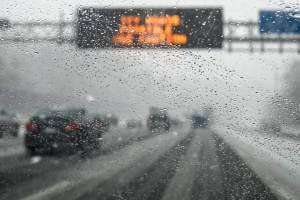
snowy road with digital sign over roadAs temperatures drop, there is a greater chance of encountering snow and ice on our roads.  While it is important to take the necessary precautions to help ensure your safety, crashes can still happen.  These collisions have the potential to be very dangerous, particularly when ice is involved because vehicles do not stop as easily in these conditions.

When a crash happens and snow or ice was a factor, it is only natural to have questions or concerns about how this may impact your ability to seek insurance compensation for injuries and damages.

Will the insurance company claim you are at fault because you were driving too fast?  Will the other driver attempt to avoid responsibility for the crash by claiming it was caused by snow or ice?

If you have questions after a car crash, it is important to reach out to a qualified lawyer for assistance.  The Bloomington auto accident attorneys of TSR Injury Law have obtained millions in compensation for crash victims and have detailed knowledge of car insurance claims in Minnesota.  The initial consultation is free.

What if I Am Partially to Blame for the Crash?

One of the benefits of living in a no-fault state like Minnesota is you can file a claim against your personal injury protection (PIP) coverage no matter who was at fault.  PIP may provide compensation for things like medical expenses, lost wages and the cost of replacement services.

However, what happens if your damages exceed the value of your PIP coverage or if you want to pursue a pain and suffering claim against the other party?

Minnesota requires a minimum of $40,000 in PIP coverage. $20,000.00 for wage loss ($500.00 weekly increments) and $20,000.00 for medical.  However, even if you purchased more than that, damages from a severe injury could quickly hit your coverage limit.  In addition, no matter what happens with the PIP claim, you have the right to pursue a bodily injury claim.

When pursuing a claim against the other driver’s liability insurance policy (for unpaid bills, wage loss or pain and suffering) the at-fault insurance will always blame snow or ice to deflect responsibility.  Early investigation by an attorney on your side can often offset these ice and snow defenses.  In addition, even if you are partly at fault for the crash, your lawyer may still be able to file a claim because Minnesota law says you can recover compensation if you are less than 51 percent at fault.

Anyone who bears partial fault will see his or her compensation award reduced by the percentage of fault he or she is assigned.  That means someone who is 20 percent at fault will see his or her compensation award reduced by 20 percent.  Just one more reason to start investigating and documentation collection right away after a crash to avoid any insurance discounts.

Contesting Partial Fault for a Crash

Insurance companies will look for any reason to assign fault for a crash.  The presence of snow or ice could be reason enough for them to say you were at least partially to blame.  They may say you were speeding, or your tires were old and could not gain enough traction.  They could argue their client had no idea there was ice on the road and the crash was “unavoidable” and therefore no one is at fault.

If you can safely collect evidence at the scene, you should try to do so.  For example, taking pictures of the damage to both vehicles could be very important.  Often, the damage to both vehicles helps to prove how the crash occurred.  Listening to what the bad driver says to the police could later help.  If the ice defense pops up later but was never said to police that is good evidence.

You may be tempted to admit partial fault for a crash.  For example, you think “maybe I was going to fast…”  Do not admit anything.  The insurance company will take an innocent questionable statement and argue it as a fact.  Always tell your attorney your opinions and concerns and let us determine the best way to present them.  We simply are trying to prevent the insurance company assigning you a lot more fault than you deserve.

Preparing Your Car for Winter Weather

While it is not possible to prevent every crash, there are things you can do to help ensure your car is safe to drive in winter weather.  Taking these steps may also help prevent the insurance company from claiming you are at fault for a crash in icy or snowy conditions.

  • Check your tire pressure each week
  • Keep an eye on the tread depth of your tires – make sure to replace tires when the treads are too low as they will struggle to gain traction in snow or ice.  Best case is to change to winter ties for the cold months and summer tires for the rest.
  • Change out your windshield wipers for winter windshield wipers
  • Make sure you have enough windshield washer fluid
  • Make sure your gas tank is at least half full to prevent moisture from forming in the gas line and freezing
  • Slow down in winter weather – this allows you more time to slow down or maneuver away from danger
  • Drive defensively – reckless drivers do not change their behavior just because of bad weather
  • Make sure your headlights and brake lights work and replace any broken lights or burned out fuses
  • Stay off the roads if you are concerned about your safety or your ability to drive safely
  • Be cautious on bridges and overpasses, as ice may form more quickly on these surfaces
  • Leave more room between the car in front of you than you normally would
  • Use your headlights, even during the day, as they may help you find shiny spots on the road that could be ice

TSR is Here to Help. Call to Schedule a Free Consultation

You do not have to go through the legal process alone.  You have the option of hiring an attorney to represent your best interests and hold the insurance company accountable for compensating you for damages covered by the policy.

TSR’s experienced legal team has been fighting for crash victims for more than 20 years and has recovered over a billion on behalf of our clients.

Your initial consultation is always free and there is no obligation to take legal action.  We also do not charge legal fees unless you receive compensation.

Call today for help and answers to your questions. Ph: (612) TSR-TIME

Can a Property Owner Be Held Liable for a Fall Caused by Snow or Ice in Minnesota?

walking while shoveling snowOne of the most common reasons for a slip and fall accident is a slippery or wet surface.  In the late fall and winter months in a state like Minnesota, snow or icy conditions can cause many people to slip and fall.

While many people brush off slip and fall accidents as no big deal, the truth is serious injuries often result from these situations.  Victims may be able to seek compensation if they were on another’s property – the property owner may have been required by law to remove the snow or ice.

However, liability for a fall caused by snow or ice can be a complex issue.  That is why you should strongly consider seeking legal help.  You do not want to talk to just any attorney, you need an experienced lawyer with a track record of recovering compensation for injury victims in Minnesota.

TSR Injury Law has recovered millions on behalf of our clients and there is no obligation to take legal action after meeting with us.

What Does the Law Say About Removing Snow and Ice?

The state of Minnesota does not have any laws requiring municipalities to create or enforce policies on removing snow from sidewalks.  However, most municipalities do have ordinances on this issue.

For example, Chapter 445 of the Minneapolis Code of Ordinances deals with this issue.  The code says property owners of any buildings that border, abut or adjoin any street must remove snow or ice within fours of daylight after snow stops falling.  A property owner is anyone having custody, care or control of any building. Daytime hours are between 8 a.m. and 5 p.m.

This part of the code excludes those who own one or two-family dwellings.  However, owners of these properties must remove snow from a public sidewalk that abuts or adjoins their lot within 24 hours of snowfall ending.  If they are unable to remove any snow, they must sprinkle sand on the sidewalk.

Business owners must keep driveways leading into their businesses clear of snow, ice or other debris.  This part of the law applies to anyone carrying on a business, profession, vocation, parking lot, or other service the city requires a license or permit from the city, provided they are operating next to a public street or boulevard.  Those who fail to comply could have their business license or permit revoked by the city.

Failing to comply with the requirements of the code is a petty misdemeanor.  Every hour past the four-hour window to remove snow or ice, or past the 24-hour window for one or two-family dwellings, is a separate violation of the code.

Establishing Liability for Your Injuries

A violation of local law on removing snow or ice may be considered a breach of the property owner’s duty of care.  In a personal injury claim, the victim must prove the at-fault party breached a duty of care and link that breach to the injury suffered.  A duty of care is an obligation to take reasonable care to help prevent others from suffering harm.

However, how do you prove the property owner exceeded the four-hour time limit for removing snow? How do you establish when snow stopped falling?

You can be sure the property owner and his or her attorney or insurance company will look for any argument to use against you to avoid responsibility for the accident.

That is why it is so important to document the accident by filing an accident report. Make sure to note the time in the report.  You should also seek immediate treatment, as this will help link your injury to the accident.  After that, contact an attorney right away.  Another important piece of evidence are photos.  It is not always possible to take photos right away, but if you can, do it.  It is often the best evidence of the timing and condition of the fall down area at the time of the fall.  Even a few hours later may have changed the condition.

The attorneys at our firm have extensive knowledge of local laws on removing snow and ice and how they may apply to a personal injury claim.  These cases are often difficult to prove, which is why you should strongly consider seeking experienced legal representation.

One factor that may play a role in your claim is whether the danger presented by the snow or ice was reasonable or unreasonable.  Sometimes people should know to avoid certain things because they are obviously very dangerous.  The at-fault party may try to use this defense against you.  For example, if you walked onto the property and the owner was in the process of clearing snow and ice, and you continued walking into a dangerous area, you may have trouble building a case against the property owner.

Injured in a Slip and Fall? Schedule a Free Consultation

Even though snow and cold weather are features of living in Minnesota, we should all be careful to avoid injuries caused by these conditions.  If you think a walkway is too slippery or might cause you trouble, maybe you should avoid it.

However, no matter how safe you try to be, an accident could still happen.  If it does, our Minneapolis slip and fall lawyers are ready to help you.  Schedule your free consultation today to learn more about our services and the benefits of having qualified legal representation.

TSR Injury Law. No Upfront Fees.  Call (612) TSR-TIME.

Liability for a Car Accident Caused by a Heart Attack or Sudden Medical Emergency

test result images under stethoscope on tableOne of the scariest things that could happen to any driver is for him or her to suffer a sudden medical emergency, like a heart attack, seizure, stroke or sudden loss of consciousness. Drivers could easily lose all control of the vehicle and get into a life-threatening crash.

Generally, a heart attack or other medical emergency is not the driver’s fault. That may raise questions about whether the driver can be held liable for the damages the crash caused.

TSR Injury Law discusses this issue in greater detail below, explaining some of the issues that will likely need to be considered. Our firm offers a free consultation for crash victims to discuss their potential legal options. Whether you are considering filing a claim, or already have and are struggling to negotiate with the insurance company, Bloomington auto accident lawyers may be able to help.

What is a Sudden Medical Emergency?

A sudden medical emergency is an unforeseen situation that puts a person’s life at risk. For example, people do not know when a stroke, heart attack, seizure or sudden loss of consciousness (syncope) may occur. When these things happen, immediate medical treatment is essential to save the person’s life and try to stabilize his or her condition.

If you have ever experienced a sudden medical emergency or witnessed someone else experiencing this type of emergency, you know they would be unable to safely operate a motor vehicle while it is happening.

That is why it is so important for people who are experiencing signs of a stroke or heart attack to get off the road as soon as possible.

Signs of a heart attack include:

  • Pain in the center of the chest that feels like pressure or squeezing
  • Pain in one or both arms, neck, jaw or back
  • Shortness of breath, with or without chest pain

Signs of a stroke include:

  • Numbness or weakness in the face, arm or leg, particularly on one side of your body
  • Confusion
  • Trouble speaking
  • Sudden, severe headache
  • Loss of balance
  • One side of your face is drooping

Can Drivers Use a Sudden Medical Emergency Defense?

Many states allow drivers to use a sudden medical emergency defense to escape liability for a crash that occurred when they were incapacitated. The theory of this defense is the driver did not act negligently cause the crash, so he or she should not be held liable for any resulting damages.

However, Minnesota does not appear to have clear statutes or case law on this type of defense. This shows why it is so important to work with a licensed attorney, as countering this defense could be quite complicated.

In March 2000, an appellate court in Minnesota discussed this issue in a case involving a car crash where one driver suffered a seizure. The court said the standard for the sudden incapacity defense was not well-established in the state and existing case law on sudden medical emergencies is sparse. In the appeal, the victim of the crash was requesting the court to reverse the district court’s summary judgment in favor of the other driver.

The appeal argued there was inconclusive evidence the other driver suffered a seizure. The appeal disputed the testimony of the emergency medical technician, who said witnesses said they thought the driver had a seizure. The appeal asserted there was abundant evidence the driver fell asleep and did not have a seizure.

Another case that dealt with this issue was dismissed by a federal district court in February 2014. The lawsuit involved a crash between a fuel truck and a passenger vehicle.

Medical tests found the truck driver had a sudden drop in blood pressure that caused him to pass out. The fuel truck driver’s defense team argued this was an “Act of God” and the court dismissed the case. The fuel truck driver did not face liability for the crash.

Generally, the key to successfully using an Act of God defense is to provide evidence the event could not have been foreseen or mitigated by human activity.

What if the Emergency was Foreseeable?

Sudden medical emergencies are often not foreseeable. However, there are times when drivers should know they have an increased risk of losing consciousness or becoming suddenly incapacitated. For example, someone who is prone to seizures may have been told not to drive by his or her doctor.

Someone diagnosed as diabetic needs to carefully monitor his or her blood sugar to make sure it does not get too low. If this happens, there is a higher risk of the driver passing out. If a diabetic does not eat for a long period of time and gets behind the wheel, he could be putting himself and others at risk.

As noted earlier, there are common signs of a heart attack or stroke, so if a driver identifies these symptoms for getting behind the wheel, he or she may not be able to use a sudden medical emergency defense.

If you are involved in a crash with a driver who was incapacitated, your attorney may look for a history of medical issues to determine if the emergency was foreseeable or not.

Need Help After a Crash? Give TSR Injury Law a Call

Our experienced attorneys know how important it is to recover compensation after a crash. We want our clients to have the compensation they need to properly treat their injuries and give them the chance to make the best recovery possible.

Our firm has obtained over a billion on behalf of our clients and we do not charge upfront fees for our services.

Schedule a free consultation today to learn more. (612) TSR-TIME

How Long Do I Have to Claim an Injury After a Car Crash?

Current image: How Long Can You Claim Injury Social

Car crashes that do not result in significant damage to your vehicle can still cause you to suffer significant injuries. However, you may not notice symptoms immediately after the crash. Unfortunately, crash victims in this situation may delay seeking medical attention or filing an injury claim with their insurance company. However, is this a bad idea? Do you still have time to file for damages?

The short answer is that you still have time to file a claim, but it will be a lot harder to prove you have a case than if you had filed right away. For one, the insurance company will use the delay against you. They will argue that if you were truly injured, you would have gotten medical care immediately after the crash. Alternatively, they may say that if you were hurt, it happened elsewhere and was caused by something besides the crash.

Another factor that could complicate your ability to claim your injury is if you talked to the insurance company right after the crash. Did you tell them were not injured? Did you say you felt OK? If so, they will likely use these words against you.

While your lawyer may still be able to obtain compensation, statements like this could present a significant obstacle.

What Is the Deadline for Filing a Car Crash Claim?

Your insurance company likely has a deadline for filing a claim, and if you miss it you may lose the right to do so. That is why it is important to contact a Minneapolis car accident lawyer right away to determine if you may be eligible for compensation.

In addition to the basic setting up a claim, there are also legal deadline requirements to file a lawsuit on injury claims. Statute of limitations vary by state and also by type of claim. The SOL can be as short as  two years from the date of the crash. Even though most car crash claims are resolved through an insurance settlement, sometimes your lawyer may need to take the insurance company to court to pursue maximum compensation.

By contacting a lawyer right away, he or she can determine if you may have a case and get to work gathering evidence. You want to give your lawyer enough time to prepare to file a lawsuit if it becomes necessary.

What Is the Risk If I Wait to File a Car Crash Claim?

Not only could you pass the deadline for filing a claim, you could be giving the insurance company and at-fault party a strong reason to deny or devalue your claim.

After a car crash, insurance companies and at-fault parties are always looking for some way to attack your credibility. If there is a significant gap in time (more than a day or two) between the crash and you filing a claim, they may say you are just trying to get money and are not significantly injured.

They are especially likely to use these arguments if you did not seek treatment for weeks or months after the crash. The burden of proof for linking an injury to a crash is on the victim. It can be very difficult to establish this connection if your injuries were diagnosed a week or a month after your crash.

It is never a bad idea to go to the hospital or urgent care after a car crash. A licensed medical professional can look you over and run tests to help determine if any injuries occurred.

It may take more time for significant injuries to develop, but by seeking treatment quickly, you are documenting your initial pains that later can be linked to the crash. You are also helping to make it that much harder for insurance companies and at-fault parties to dispute your intention for filing a claim or attack your credibility.

What Statements Should I Give the Insurance Company?

It is best to keep your statements to the insurance company brief. You may not think you are seriously injured, but that may change in the future. You want to leave yourself room to maneuver if you begin experiencing symptoms. That means avoiding definitive statements about your condition, as these statements could soon prove to be inaccurate.  The number one rule is to speak to an attorney before ever giving an insurance statement.

TSR Injury Law is Here to Help. Call Us Today.

If you have any questions about your claim or the legal process, give us a call today. We are here to help crash victims, including assessing whether you may have a valid claim for compensation.

There is no risk in contacting us because we do not charge for an initial consultation and you are not required to hire us if we find you have a case. In fact, our attorneys are not paid to represent you unless we obtain compensation for your damages.

Read our testimonials page to see what our clients have to say about the representation we provided them.

Call TSR Injury Law. No upfront fees. (612) TSR-TIME.