
Snowmobile Accident Lawyers in Minnesota

$1 Billion+ Recovered
5 Star Rated by our clients
26+ Years of Experience
$1 Billion+ Recovered
5 Star Rated by our clients
26+ Years of Experience

Free Case Review

No Fees Unless We Win

Proven Results for Seriously Injured Clients

If you or someone you love was hurt in a snowmobile crash, you don't have to navigate the aftermath alone. You may be able to recover compensation for medical expenses, lost income, and the long-term impact of your injuries. TSR Injury Law has been standing up for injured Minnesotans for more than 20 years – recovering millions in compensation across Hennepin County and the entire state.

Snowmobile crashes often cause injuries similar to other high-impact vehicle incidents. TSR’s track record in serious injury and product-related cases includes:

  • $12,000,000 – Settlement for a man whose injuries required a leg amputation
  • $4,000,000 – Settlement for a woman whose dominant arm was injured in a crash with a commercial truck
  • $3,750,000 – Settlement for a below-the-knee amputation caused by a defective recreational vehicle control mechanism

Every case is different, but these results show how seriously we pursue maximum compensation when negligence changes a client’s life.

Review My Case
Do I Have a Snowmobile Crash Case?

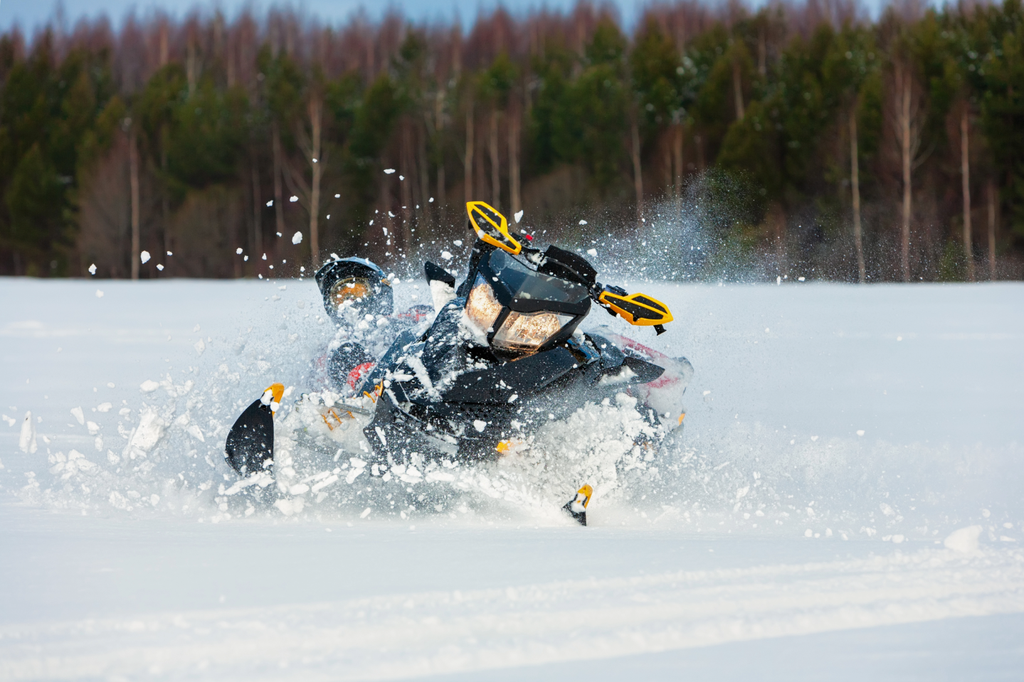
Most snowmobile injury claims are based on negligence. To pursue compensation, we generally need to show that the other party failed to act with reasonable care and that failure caused your injuries. This can include:

  • Careless operation of the snowmobile
  • Unsafe riding on trails, lakes, roads, or private property
  • Poor maintenance or defective equipment
  • Allowing an inexperienced or impaired rider to operate the machine

Whether you were operating the snowmobile or riding as a passenger, TSR will review your situation and determine if you may have a case.

To prove negligence, we look at four elements:

Duty of care: The other party had a legal duty to act reasonably to avoid causing harm.

Breach of duty: They failed to meet that duty – by speeding, riding recklessly, ignoring trail rules, operating under the influence, or otherwise acting unreasonably.

Causation: Their behavior directly led to the crash and your injuries.

Damages: You suffered measurable losses: medical bills, lost income, property damage, pain and suffering, or permanent limitations.

Proving these elements can be challenging without help. TSR’s snowmobile accident lawyers know how to investigate winter crashes, preserve evidence, and build strong claims.


Compensation After a Snowmobile Crash

Snowmobile accidents can cause serious injuries, including:

  • Broken bones and complex fractures
  • Internal injuries and organ damage
  • Traumatic brain injuries (TBI)
  • Spinal cord damage and paralysis
  • Facial trauma and scarring

These injuries often require extensive treatment and long recoveries. If you have a valid claim, you may be able to recover compensation for:

  • Past, current, and future medical bills
  • Rehabilitation and physical therapy
  • Assistive devices (wheelchairs, crutches, braces)
  • Home or vehicle modifications for disabilities
  • Long-term care services if you need ongoing help
  • Lost wages and loss of future earning capacity
  • Pain and suffering and loss of enjoyment of life

TSR works with medical and financial experts to understand how the crash will affect you long-term—and to pursue every dollar you’re entitled to.


What If I Was Trespassing on Private Property?

Snowmobile crashes sometimes happen on private land. Under Minnesota trespass laws:

  • You generally must be lawfully on the property – as an invited guest or for a permitted purpose – to hold a landowner responsible.
  • If you were trespassing, the property owner may have little or no duty to protect you from injury.

That doesn’t mean you never have options, but it makes the analysis more complex. If your crash involved private land, TSR’s snowmobile accident lawyers can review what happened, explain your rights, and identify any potential sources of recovery.


Time Limits for Snowmobile Injury Claims in Minnesota

Snowmobile cases are subject to Minnesota’s statute of limitations. That means you only have a limited time to file a claim or lawsuit after your crash.

In many injury cases, you may have as little as two years from the date of the crash to take legal action. Some situations allow more time—for example, when the victim is a minor or legally incapacitated—but waiting is risky.

If you miss the filing deadline, you can lose your right to pursue compensation, no matter how serious your injuries are. TSR can help you understand which deadline applies and make sure you don’t miss it.


Will Not Wearing a Helmet Hurt My Case?

Minnesota law requires snowmobile riders under 18 to wear a DOT-compliant helmet (with limited exceptions).

If you weren’t wearing a helmet, you may still have a case—especially if someone else’s negligence caused the crash. However:

  • Insurance companies often argue that your injuries are worse because you weren’t wearing a helmet.
  • They may use that argument to reduce or deny your claim.

TSR investigates how the crash happened, what caused your injuries, and how much of a role, if any, a missing helmet truly played. We push back on unfair attempts to blame you for an accident someone else caused.


Minnesota Snowmobile Laws You Should Know

Under Minnesota law, a snowmobile is a self-propelled vehicle designed for travel on snow or ice, steered by skis or runners.

Registration

Most snowmobiles operated in Minnesota must be registered with the Department of Natural Resources (DNR).

Operation & Safety

Snowmobile operators generally must have either a snowmobile safety certificate, or a safety indicator on their driver’s license or state ID.

Minnesota law prohibits riding faster than posted speed limits on trails and limits speeds to 50 mph on most public lands and waters.

Other basic rules include passing on the left when overtaking, slowing down and staying to the right when meeting another rider, and giving the right-of-way to the operator on the right at an intersection.

Violations of these rules can be powerful evidence of negligence in a crash.


Snowmobile Insurance Coverage

Snowmobile crashes are often covered under one or more insurance policies, including:

  • Homeowner’s insurance: May cover liability if someone is injured on your property or by your snowmobile
  • Snowmobile insurance: Many riders carry separate policies for their machines
  • Liability: Pays for the other party’s injuries and property damage if you’re at fault
  • Collision: Pays for damage to the snowmobile from a crash
  • Comprehensive: Covers non-collision losses like theft, fire, vandalism, or animal damage
  • Medical payments (MedPay): Helps pay medical bills for injuries, regardless of fault

In some cases, an umbrella policy may also apply. TSR identifies every possible coverage to prevent you from leaving money on the table.


What to Do After a Snowmobile Crash

Your safety comes first—but your actions after a crash can also impact your claim. If you can, try to:

  1. Seek medical care – Get checked out right away, even if you feel "okay."
  2. Report the crash – Call law enforcement. Minnesota law generally requires reporting to the DNR within 48 hours if there is a death, serious injury, or property damage over $500.
  3. Document the scene – Take photos or video of the crash site, sleds, tracks, trail conditions, signage, visibility, and your injuries.
  4. Exchange information – Get names, contact information, and insurance details from everyone involved.
  5. Talk to a lawyer before the insurance company – Insurers are focused on minimizing what they pay. TSR’s lawyers can handle all communication with adjusters and protect your claim from the start.

Why Snowmobile Crashes Happen

Snowmobiles can weigh more than 400 pounds and travel at high speeds. When something goes wrong, the consequences can be severe.

Speeding or Reckless Riding

Riding too fast for the conditions makes it easy to lose control, especially on ice, tight trails, or unfamiliar terrain.

Poor Trail or Property Conditions

Neglected trails, unmarked hazards, and unsafe property conditions can contribute to collisions with trees, posts, or fences, loss of control on rutted or icy surfaces, and crashes caused by hidden obstacles.

Drug or Alcohol Use

Operating a snowmobile while impaired slows reaction time and clouds judgment. Riding under the influence is both dangerous and illegal.

Mechanical Defects and Maintenance Issues

Some crashes are caused not by the rider, but by defective design or manufacturing, recalled or faulty parts, or poor maintenance or repairs. These cases may involve product liability claims against manufacturers.


Why Choose TSR Injury Law

Proven Success

Over $1 billion recovered for injured Minnesotans.

Recognized Attorneys

Ranked among Minnesota's top attorneys by Super Lawyers.

No Contingency Fees

You don't pay unless we win your case.

5-Star Rated

By clients across Minnesota.


Need Help After a Snowmobile Crash? It’s TSR Time.

If you or someone you love was injured in a snowmobile crash, don’t wait to get legal help.

TSR Injury Law has been standing up for injured Minnesotans for more than 20 years – and we know how to fight for what you deserve.

CALL 612-TSR-TIME (612) 877-8463